
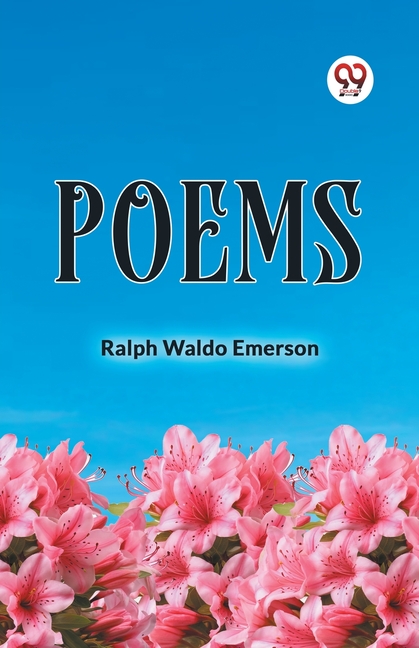
Poems - Paperback
$28.99
$30.99
-6%Quantity
01
Pay over time for orders over $35.00 with
Offers & Perks
Earn 28 points with this purchase
Added to your rewards balance after checkout.
100 points welcome bonus
Create an account and start with extra points.
Languages:EnglishPublisher:Double 9 BooksISBN-13:9789360463106ISBN-10:9360463108UPC:9789360463106Book Category:Poetry, PhilosophyBook Subcategory:American, EssaysSize:8.50 x 5.50 x 1.02 inchesWeight:0.577Product ID:SCQGNQD7SE
In addition to his writings and transcendentalist thoughts, Ralph Waldo Emerson made a big effect on American poetry with his collection of poems called "Poems." Emerson's unique speech and philosophical view on lifestyles are shown on this series. Emerson writes "Poems," which might be about nature, religion, and the divine nature that lives in anybody. Many instances, his poetry is a manner for him to explicit transcendentalist ideas, which strain how humans are related to both the natural world and the divine. One of his poems, "Brahma," shows how fascinated he was in Hindu idea and the idea of the "standard spirit." Emerson additionally wrote well-known songs on this collection, which includes "The Rhodora," wherein he thinks about the beauty and motive of nature, and "Concord Hymn," which he wrote for the willpower of the Battle Monument in Concord. It is easy to recognize Emerson's poetic style due to its considerate tone, regular rhythm, and deep appreciate for the beautiful in each nature and people. Ralph Waldo Emerson's "Poems" display how he could use poetry to express deep philosophical thoughts. Emerson's poems are a crucial a part of American transcendentalist literature, even though they aren't as nicely known as his essays. They take readers on a poetic adventure through the landscapes of nature and the human thoughts.
Languages:EnglishPublisher:Double 9 BooksISBN-13:9789360463106ISBN-10:9360463108UPC:9789360463106Book Category:Poetry, PhilosophyBook Subcategory:American, EssaysSize:8.50 x 5.50 x 1.02 inchesWeight:0.577Product ID:SCQGNQD7SE
Waldo Emerson, Ralph: - Ralph Waldo Emerson was an American essayist, speaker, philosopher, abolitionist, and poet who lived from May 25, 1803 to April 27, 1882. He went by his middle name, Waldo. He led the transcendentalist movement in the middle of the 1800s. People looked up to him as a supporter of freedom and critical thinking, as well as a wise critic of how society and conformity can make people feel bad about themselves. He was called "the most gifted of the Americans" by Friedrich Nietzsche, and Walt Whitman called him his "master." Emerson slowly moved away from the religious and social beliefs of his time. In his 1836 essay "Nature," he formulated and explained the theory of transcendentalism. After this, in 1837, he gave a speech called "The American Scholar." Oliver Wendell Holmes Sr. thought it was America's "intellectual Declaration of Independence." Emerson was born on May 25, 1803, in Newbury, Massachusetts. His parents were Ruth Haskins and the Rev. William Emerson, who was a Unitarian preacher. He was named for Ralph, his mom brother, and Rebecca Waldo, his dad great-grandmother. William, Edward, Robert Bulkeley, and Charles were the other four sons who lived to adulthood. Ralph Waldo was the second of these boys to do so.
Publisher: Double 9 Books
Contributor(s)
Author
Free shipping on orders over $75. Standard shipping takes 3-7 business days. Eligible items may be returned within 30 days of delivery. Conditions apply.