
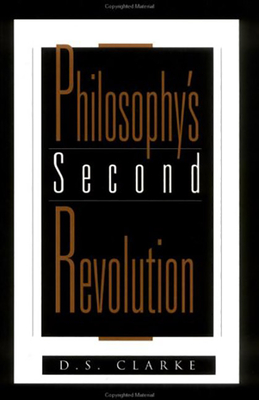
Philosophy's Second Revolution: Early and Recent Analytic Philosophy - Hardcover
by Clarke
$30.99
$42.95
-28%Quantity
01
Pay over time for orders over $35.00 with
Offers & Perks
Earn 30 points with this purchase
Added to your rewards balance after checkout.
100 points welcome bonus
Create an account and start with extra points.
Availability:In StockContributor:ClarkeTheme:Chronological Period/ModernPublish date:10/11/1999Pages:256
Languages:EnglishPublisher:Open CourtISBN-13:9780812693478ISBN-10:0812693477UPC:9780812693478Book Category:PhilosophyBook Subcategory:History & SurveysBook Topic:ModernSize:9.26 x 6.42 x 0.85 inchesWeight:0.599Product ID:SCKW1AHP3D
Since its inception in ancient Greece, Western philosophy has undergone two revolutionary breaks with its past: the first was initiated by Descartes with his 'method of doubt' that led to the questioning of basic assumptions of classical philosophy; the second arose at the beginning of the twentieth century, and is associated with the movement now known as analytic philosophy. D.S. Clarke explains some of the crucial issues raised by the second philosophical revolution, and especially the differences between the early phase of analytic philosophy, covering roughly the first half of the twentieth century, and the new phase which commenced about 1960. As Philosophy's Second Revolution surveys the direction of modern philosophy, it is able to combine discussion of cutting-edge topics with an introductory survey of analytic philosophy for those with little background in logic or history of philosophy. Professor Clarke traces the historical background of the analytic movement from its origins, through its development by applications of logic to philosophical problems and by 'ordinary language' philosophers. He then concentrates on the post-1960 phase, with its rejection of earlier views dominated by Wittgenstein's methods. The new phase features the development of a materialist metaphysics, the attempt to assimilate philosophy to the natural sciences, and the attempt to reinstate normative ethics as a guide to conduct. Clarke defends the first phase against aspects of the second phase, arguing that contemporary materialism rests on the mistaken view that mental language has fact-stating functions, and that normative ethics imposes on moral reasoning a false intellectualist model.
Languages:EnglishPublisher:Open CourtISBN-13:9780812693478ISBN-10:0812693477UPC:9780812693478Book Category:PhilosophyBook Subcategory:History & SurveysBook Topic:ModernSize:9.26 x 6.42 x 0.85 inchesWeight:0.599Product ID:SCKW1AHP3D
Free shipping on orders over $75. Standard shipping takes 3-7 business days. Returns accepted within 30 days of purchase.