Surprise Castle
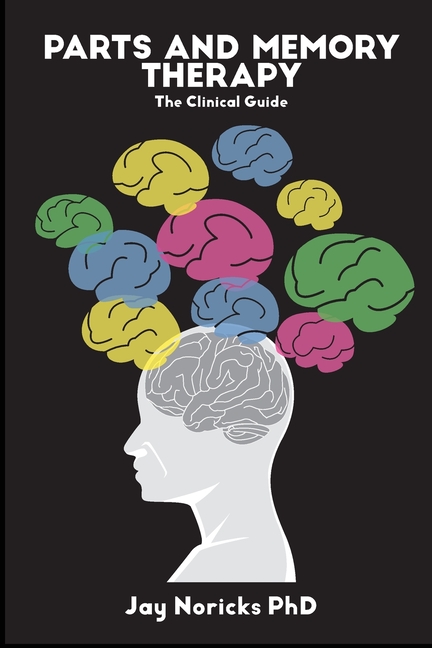
Parts and Memory Therapy: The Clinical Guide

Parts and Memory Therapy: The Clinical Guide - Paperback

$25.99
Quantity
01

Pay over time for orders over $35.00 with

Offers & Perks

Earn 25 points with this purchase

Added to your rewards balance after checkout.

100 points welcome bonus

Create an account and start with extra points.

Join now
Availability:In StockContributor:Jay NoricksPublish date:2/28/2022Pages:188
Languages:EnglishPublisher:New University Press LLC.ISBN-13:9780996929110ISBN-10:0996929118UPC:9780996929110Book Category:Psychology, Social ScienceBook Subcategory:Psychotherapy, Psychopathology, AnthropologyBook Topic:Counseling, Dissociative Identity Disorder, Cultural & SocialSize:9.00 x 6.00 x 0.43 inchesWeight:0.281Product ID:SC27GQ5168
This book provides a clinical guide for psychotherapists and counselors in the use of Parts and Memory Therapy (P&MT) to treat emotional or psychological problems. Additionally, the book aims to present a clear and compelling narrative for lay persons who wish to know about the latest cutting-edge developments in psychotherapy. For both audiences, this clinician's guide provides a brief introduction to the basic P&MT concepts, tools, and techniques. They are the foundation for the treatment protocols that follow in the later chapters of the book.


A "Part" with a capital "P" is the term I use to reference what other scholars call parts, ego states, sides, subpersonalities, voices, self-states, and many more. I will sometimes use the word "subpersonality" or "ego state" in place of "Part" to avoid monotony and also to make specific grammatical issues easier to negotiate. These terms refer to natural subdivisions in what we usually call our personality or our self. The bottom line is that the self or personality is not unitary; it's made up of many Parts...


The Guide describe many other variations in how Parts present themselves. But Parts are only half of the elements need to make P&MT work. The other half is the visualization of change that leads to permanently neutralizing the emotional memories that maintain the problem. Our interventions take advantage of memory reconsolidation, a recently discovered natural neurological process in memory formation and reformation. As utilized in our model, it permits us to neutralize the disturbing emotional memories (such as fear, grief, anger) without changing the factual, autobiographical narrative that lies at the heart of our patients' difficulties. Previously, such emotional memories were thought to be indelible. In the therapy, we confront the wounded Part of the self that carries the pain of the trauma with information or action that contradicts or creates a mismatch with the Part's expectation of continuation of its pain. That neutralizes the memory.


The major assumption made in this guide to psychotherapy is that all or nearly all mental health problems are the result of traumatic or other disturbing experiences during childhood and growing up. Since we know of these experiences only because of our memories, it follows that the solutions to mental health problems must involve the study of those memories. Beyond the rather normal memories of experiencing childhood distress such as rejection by friends or family, abandonment by a parent following divorce, being victimized by bullying, or ostracized by peers into the unpopular group, there are more than a thousand formal diagnoses recognized by the American Psychiatric Association. This guide to treatment addresses only a few widely recognized issues and provides protocols for their treatment. But these protocols can be easily adapted to many other issues that readers might wish to work with. The protocols provide guidelines for working with addictions, compulsions like trichotillomania, excoriation, and nail-biting, pain syndromes like IBS and fibromyalgia, women's issues like PMS and PMDD, and utilizing a parent surrogate to help a mute child break free of a school phobia. There is even a protocol for letting go of romantic love when that love brings only pain and a hopeless future.


Languages:EnglishPublisher:New University Press LLC.ISBN-13:9780996929110ISBN-10:0996929118UPC:9780996929110Book Category:Psychology, Social ScienceBook Subcategory:Psychotherapy, Psychopathology, AnthropologyBook Topic:Counseling, Dissociative Identity Disorder, Cultural & SocialSize:9.00 x 6.00 x 0.43 inchesWeight:0.281Product ID:SC27GQ5168
Noricks, Jay: - Jay Noricks PhD began professional life as a professor of anthropology publishing on issues of cross-cultural differences in cognition and and mental health. Since changing careers in 1993, Dr. Noricks has focused upon developing a novel, cutting-edge theory/approach of/to psychotherapy for use in clinical psychology, professional counseling, and other Mental health work. "Parts and Memory Therapy: The Clinical Guide" represents the culmination of those efforts. This book combines the theory of parts of the self (ego states, subpersonalities, inner voices) with new findings in neuroscience about how to permanently neutralize emotional memories, of trauma and trauma-like experiences that lie at the base of most mental health problems. Dr. Noricks has now conducted psychotherapy for more than 25 years.
Publisher: New University Press LLC.

Contributor(s)

Jay Noricks

Free shipping on orders over $75. Standard shipping takes 3-7 business days. Eligible items may be returned within 30 days of delivery. Conditions apply.