
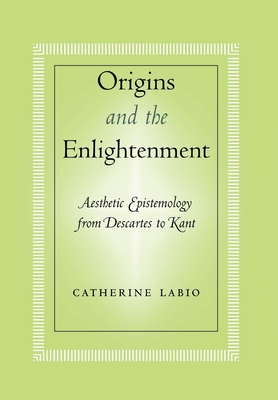
Origins and the Enlightenment: Aesthetic Epistemology from Descartes to Kant - Hardcover
Pay over time for orders over $35.00 with
Offers & Perks
Earn 72 points with this purchase
Added to your rewards balance after checkout.
100 points welcome bonus
Create an account and start with extra points.
What epistemic assumptions framed eighteenth-century thinkers' speculations regarding origins? What, if anything, connected these speculations? The best way to understand the Enlightenment's obsession with origins is to study it in conjunction with the contemporary conceptualization of originality as a criterion of aesthetic value, Catherine Labio maintains. Her expansive survey of the era's thought places special emphasis on epistemology and is genuinely interdisciplinary, drawing on such fields as anthropology, geometry, historiography, literary criticism, and political economy.
One of the most striking facets of Enlightenment thought, according to Labio, is the emergence of aesthetics as a master discourse that enabled its users to make sense of worlds ostensibly unrelated to the arts. In particular, once knowledge became defined as knowledge of things made by human beings, originality became valued not only for its novelty but also as a guarantee of epistemological certainty.
Labio analyzes the views held by a variety of European thinkers--including Baumgarten, Condillac, Descartes, Kant, Locke, Rousseau, Adam Smith, Vico, and Edward Young--on the origins of ideas, languages, nations, nature, and wealth. Throughout, the author deals with a wide range of primary and secondary materials.
Catherine Labio is Associate Professor of Comparative Literature and French at Yale University.
Contributor(s)
Author
Free shipping on orders over $75. Standard shipping takes 3-7 business days. Returns accepted within 30 days of purchase.