
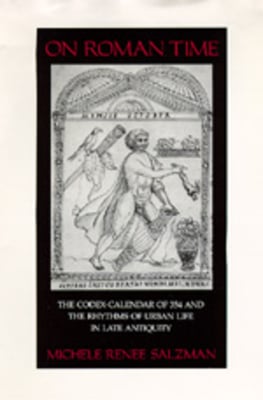
On Roman Time: The Codex-Calendar of 354 and the Rhythms of Urban Life in Late Antiquity - Hardcover
$92.99
Quantity
01
Pay over time for orders over $35.00 with
Offers & Perks
Earn 92 points with this purchase
Added to your rewards balance after checkout.
100 points welcome bonus
Create an account and start with extra points.
Availability:In StockContributor:Michele Renee SalzmanSeries:Transformation of the Classical HeritageTheme:Chronological Period/Ancient (To 499 A.D.), Cultural Region/ItalyPublish date:3/25/1991Pages:335
Because they list all the public holidays and pagan festivals of the age, calendars provide unique insights into the culture and everyday life of ancient Rome. The Codex-Calendar of 354 miraculously survived the Fall of Rome. Although it was subsequently lost, the copies made in the Renaissance remain invaluable documents of Roman society and religion in the years between Constantine's conversion and the fall of the Western Empire.
In this richly illustrated book, Michele Renee Salzman establishes that the traditions of Roman art and literature were still very much alive in the mid-fourth century. Going beyond this analysis of precedents and genre, Salzman also studies the Calendar of 354 as a reflection of the world that produced and used it. Her work reveals the continuing importance of pagan festivals and cults in the Christian era and highlights the rise of a respectable aristocratic Christianity that combined pagan and Christian practices. Salzman stresses the key role of the Christian emperors and imperial institutions in supporting pagan rituals. Such policies of accomodation and assimilation resulted in a gradual and relatively peaceful transformation of Rome from a pagan to a Christian capital.
In this richly illustrated book, Michele Renee Salzman establishes that the traditions of Roman art and literature were still very much alive in the mid-fourth century. Going beyond this analysis of precedents and genre, Salzman also studies the Calendar of 354 as a reflection of the world that produced and used it. Her work reveals the continuing importance of pagan festivals and cults in the Christian era and highlights the rise of a respectable aristocratic Christianity that combined pagan and Christian practices. Salzman stresses the key role of the Christian emperors and imperial institutions in supporting pagan rituals. Such policies of accomodation and assimilation resulted in a gradual and relatively peaceful transformation of Rome from a pagan to a Christian capital.
Michele Renee Salzman is Associate Professor of History at University of California, Riverside.
Publisher: University of California Press
Contributor(s)
Author
Free shipping on orders over $75. Standard shipping takes 3-7 business days. Eligible items may be returned within 30 days of delivery. Conditions apply.