
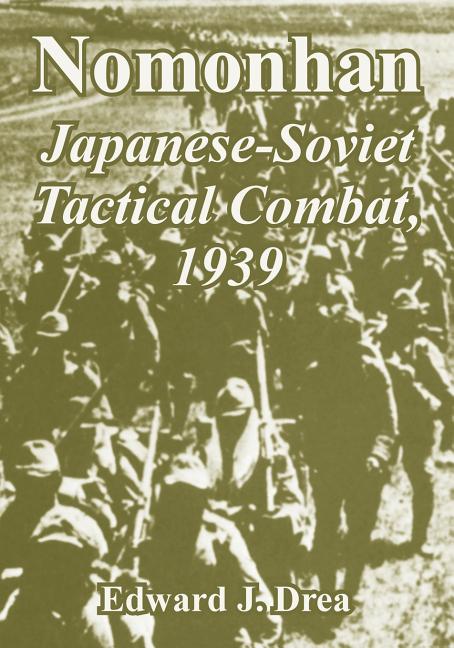
Nomonhan: Japanese-Soviet Tactical Combat, 1939 - Paperback
$22.99
$24.95
-8%Quantity
01
Pay over time for orders over $35.00 with
Offers & Perks
Earn 22 points with this purchase
Added to your rewards balance after checkout.
100 points welcome bonus
Create an account and start with extra points.
Availability:In StockContributor:Edward J. DreaTheme:Chronological Period/1940'sPublish date:5/21/2005Pages:132
Languages:EnglishPublisher:University Press of the PacificISBN-13:9781410222855ISBN-10:1410222853UPC:9781410222855Book Category:HistoryBook Subcategory:Wars & ConflictsBook Topic:World War IISize:10.00 x 7.00 x 0.28 inchesWeight:0.241Product ID:SC1T9GEMMX
Before World War II, the Imperial Japanese Army (IJA) developed an offensive tactical doctrine designed to allow its infantry forces to fight successfully against a superior foe, the Soviet Union. A battle test of that doctrine's effectiveness occurred from June trough August 1939 along the Outer Mongolian-Manchurian border. This essay follows the daily combat operations of the IJA's 2d Battalion, 28th Infantry Regiment, 7th Infantry Division, for a two-month period. During that time, the 2/28th Infantry was in constant contact with Soviet combined arms forces. In July the battalion participated in offensive operations against Soviet units commanded by General Georgi K. Zhukov. When Japanese tactical doctrine failed against a Soviet combined arms force, the Japanese went on the defensive. Japanese officers, however, regarded defensive doctrine as transitional in nature and adopted it only to gain time to prepare for a counterattack. Defensive doctrine that terrain be held until the resumption of offensive operations that would destroy the enemy. A lack of flexibility doomed the Japanese defensive effort. General Zhukov secretly marshalled his forces and in mid-August used his armor columns to spearhead a double envelopment of the static Japanese units in a position defense. The Soviets encircled the Japanese units, including the 2/28th Infantry, and the Japanese survivors had to fight their way back to friendly lines. The 2/28th Infantry's War Diary provides a vivid day-by-day account of its combat operations. This in turn allows the examination of how the Japanese applied their tactical doctrine on the battlefield. The Japanese tried to use and aggressive tactical doctrine to compensate for materiel and equipment deficiencies in their army. Such an approach was successful as long as the Japanese could conduct bold offensive operations. When they were forced to adopt a defensive posture, however, discrepancies between tactical doctrine and battlefield reality became apparent. These problems, applicable to any army, highlight fundamental difficulties of force structure, preconceptions of potential enemy capabilities, and the role of doctrine in a combat environment. An examination of small unit tactics is particularly useful to illustrate the dynamics of doctrine as expressed on the battlefield.
Languages:EnglishPublisher:University Press of the PacificISBN-13:9781410222855ISBN-10:1410222853UPC:9781410222855Book Category:HistoryBook Subcategory:Wars & ConflictsBook Topic:World War IISize:10.00 x 7.00 x 0.28 inchesWeight:0.241Product ID:SC1T9GEMMX
Free shipping on orders over $75. Standard shipping takes 3-7 business days. Eligible items may be returned within 30 days of delivery. Conditions apply.