
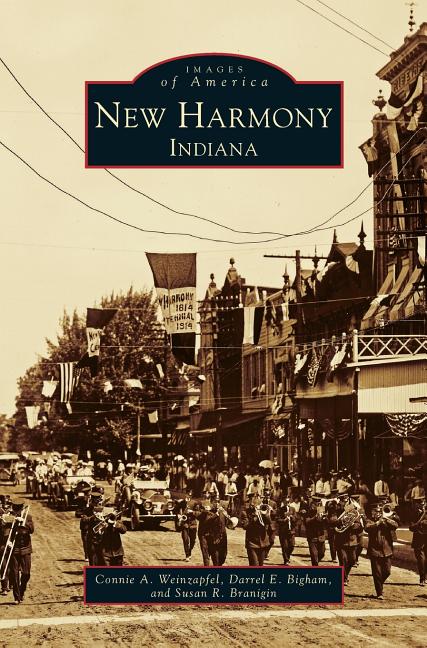
New Harmony, Indiana - Hardcover
$28.99
$39.99
-28%Quantity
01
Pay over time for orders over $35.00 with
Offers & Perks
Earn 28 points with this purchase
Added to your rewards balance after checkout.
100 points welcome bonus
Create an account and start with extra points.
Availability:In StockContributor:Connie A. Weinzapfel, Darrel E. Bigham, Susan R. BraniginTheme:Cultural Region/Midwest, Geographic Orientation/IndianaPublish date:12/7/1999Pages:130
Languages:EnglishPublisher:Arcadia Publishing Library EditionsISBN-13:9781531602291ISBN-10:1531602290UPC:9781531602291Book Category:HistoryBook Subcategory:United StatesBook Topic:State & LocalSize:9.61 x 6.69 x 0.38 inchesWeight:0.413Product ID:SCR689TQXZ
New Harmony is a town like no other. A community that
began almost two hundred years ahead of its time, New Harmony was a spiritual sanctuary that later became a haven for international scientists, scholars, and educators who sought equality in communal living. It was impossible for George Rapp
to realize the events he would set into motion when he purchased 20,000 acres of land on the Wabash River in 1814 and subsequently sold it to social reformer Robert Owen ten years later. This simple
community came to have an immense impact on our country's art and architecture, public education system, women's suffrage movement, Midwestern industrial development, and more. This book contains over 150 historic images produced by two 19th-century New Harmony photographers--Homer Fauntleroy
and William Frederick Lichtenberger. These photographs show historic buildings of New Harmony, many of which have been razed over the years. They also demonstrate the importance of the Wabash River and its influence on settlement and commerce. The people of the community are captured at work and at play, and the reader is allowed a look at the downtown business district of the past and the farms surrounding it.
began almost two hundred years ahead of its time, New Harmony was a spiritual sanctuary that later became a haven for international scientists, scholars, and educators who sought equality in communal living. It was impossible for George Rapp
to realize the events he would set into motion when he purchased 20,000 acres of land on the Wabash River in 1814 and subsequently sold it to social reformer Robert Owen ten years later. This simple
community came to have an immense impact on our country's art and architecture, public education system, women's suffrage movement, Midwestern industrial development, and more. This book contains over 150 historic images produced by two 19th-century New Harmony photographers--Homer Fauntleroy
and William Frederick Lichtenberger. These photographs show historic buildings of New Harmony, many of which have been razed over the years. They also demonstrate the importance of the Wabash River and its influence on settlement and commerce. The people of the community are captured at work and at play, and the reader is allowed a look at the downtown business district of the past and the farms surrounding it.
Languages:EnglishPublisher:Arcadia Publishing Library EditionsISBN-13:9781531602291ISBN-10:1531602290UPC:9781531602291Book Category:HistoryBook Subcategory:United StatesBook Topic:State & LocalSize:9.61 x 6.69 x 0.38 inchesWeight:0.413Product ID:SCR689TQXZ
Publisher: Arcadia Publishing Library Editions
Contributor(s)
Free shipping on orders over $75. Standard shipping takes 3-7 business days. Eligible items may be returned within 30 days of delivery. Conditions apply.