
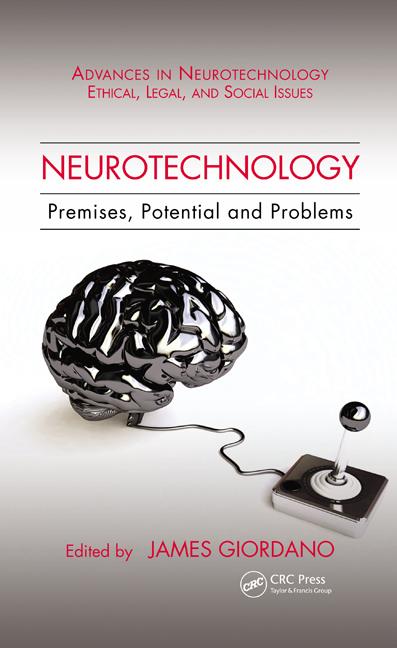
Neurotechnology: Premises, Potential, and Problems - Hardcover
Pay over time for orders over $35.00 with
Offers & Perks
Earn 247 points with this purchase
Added to your rewards balance after checkout.
100 points welcome bonus
Create an account and start with extra points.
New technologies that allow us to investigate mechanisms and functions of the brain have shown considerable promise in treating brain disease and injury. These emerging technologies also provide a means to assess and manipulate human consciousness, cognitions, emotions, and behaviors, bringing with them the potential to transform society. Neurotechnology: Premises, Potential, and Problems explores the technical, moral, legal, and sociopolitical issues that arise in and from today's applications of neuroscience and technology and discusses their implications for the future.
Some of the issues raised in this thought-provoking volume include:
- Neurotechnology in education: an enablement, a treatment, or an enhancement?
- The potential and limitations of neuroimaging technology in determining patient prognoses
- Tissue implantation technology as a way of engendering personalized medicine
- Neuroprostheses: restoration of functions of the disabled vs. enhancement to transhuman capabilities
- Deep brain stimulation and its use in restoring, preserving, or changing patients' personal identity
- The benefit and risk of cognitive performance tools
- Cyborg technology and its potential to change our vision of humanity
- Methodologies for reducing the risk of neurotechnology's impact on ethical, legal, and social issues
With contributions from an international group of experts working on the cutting edge of neurotechnology, this volume lays the groundwork to appreciate the ethical, legal, and social aspects of the science in ways that keep pace with this rapidly progressing field.
James Giordano, PhD, is Director of the Center for Neurotechnology Studies at the Potomac Institute for Policy Studies, Arlington, Virginia, Fulbright Professor of Neuroscience, Neurotechnology and Ethics at the Human Science Center of Ludwig-Maximilians University, Munich, Germany, and Research Professor of Neurosciences and Ethics in the Department of Electrical and Computational Engineering at the University of New Mexico in Albuquerque. His ongoing research addresses the ethical issues that are generated from neuroscientific and neurotechnological research and its applications in medicine, public life, and sociocultural conduct.
Contributor(s)
Free shipping on orders over $75. Standard shipping takes 3-7 business days. Eligible items may be returned within 30 days of delivery. Conditions apply.