
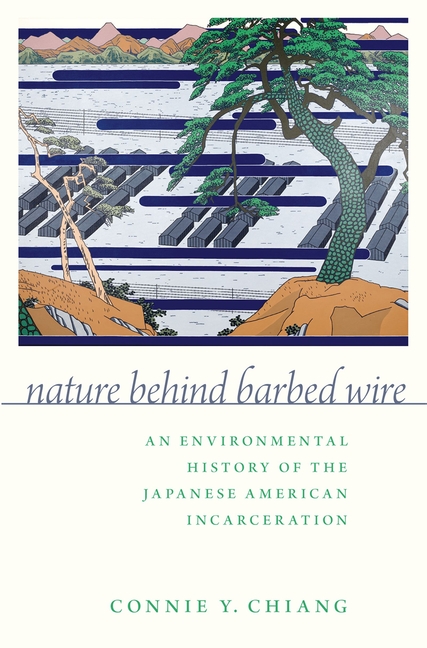
Nature Behind Barbed Wire: An Environmental History of the Japanese American Incarceration - Paperback
$41.99
Quantity
01
Pay over time for orders over $35.00 with
Offers & Perks
Earn 41 points with this purchase
Added to your rewards balance after checkout.
100 points welcome bonus
Create an account and start with extra points.
Availability:In StockContributor:Connie Y. ChiangTheme:Chronological Period/1940's, Cultural Region/Japanese, Cultural Region/Western U.S.Publish date:9/1/2020Pages:330
Languages:EnglishPublisher:Oxford University PressISBN-13:9780197533567ISBN-10:0197533566UPC:9780197533567Book Category:HistoryBook Subcategory:United States, Asia, Wars & ConflictsBook Topic:State & Local, Japan, World War IISize:9.20 x 6.20 x 0.70 inchesWeight:0.477Product ID:SCYANWB24W
The mass imprisonment of over 110,000 people of Japanese ancestry during World War II was one of the most egregious violations of civil liberties in United States history. Removed from their homes on the temperate Pacific Coast, Japanese Americans spent the war years in desolate camps in the nation's interior. Photographers including Ansel Adams and Dorothea Lange visually captured these camps in images that depicted the environment as a source of both hope and hardship. And yet the literature on incarceration has most often focused on the legal and citizenship statuses of the incarcerees, their political struggles with the US government, and their oral testimony. Nature Behind Barbed Wire shifts the focus to the environment. It explores how the landscape shaped the experiences of both Japanese Americans and federal officials who worked for the War Relocation Authority (WRA), the civilian agency that administered the camps. The complexities of the natural world both enhanced and constrained the WRA's power and provided Japanese Americans with opportunities to redefine the terms and conditions of their confinement. Even as the environment compounded their feelings of despair and outrage, the incarcerees also found that their agency in transforming and adapting to the natural world could help them survive and contest their incarceration. Japanese Americans and WRA officials negotiated the terms of confinement with each other and with a dynamic natural world. Ultimately, as Connie Chiang demonstrates, the Japanese American incarceration was fundamentally an environmental story.
Languages:EnglishPublisher:Oxford University PressISBN-13:9780197533567ISBN-10:0197533566UPC:9780197533567Book Category:HistoryBook Subcategory:United States, Asia, Wars & ConflictsBook Topic:State & Local, Japan, World War IISize:9.20 x 6.20 x 0.70 inchesWeight:0.477Product ID:SCYANWB24W
Connie Y. Chiang is Professor of History and Environmental Studies at Bowdoin College. She is the author of Shaping the Shoreline: Fisheries and Tourism on the Monterey Coast.
Publisher: Oxford University Press
Contributor(s)
Author
Free shipping on orders over $75. Standard shipping takes 3-7 business days. Eligible items may be returned within 30 days of delivery. Conditions apply.