
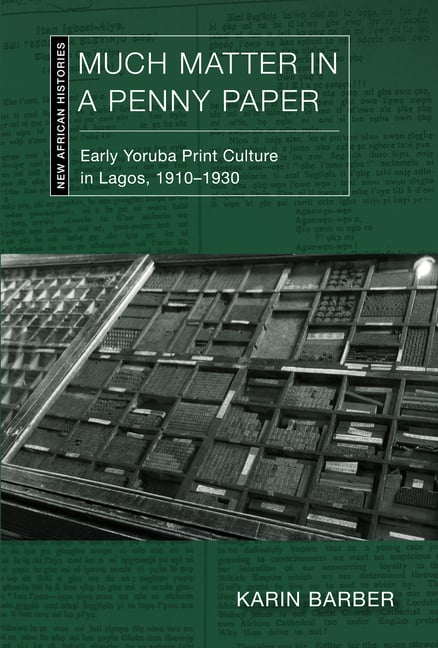
Much Matter in a Penny Paper: Early Yoruba Print Culture in Lagos, 1910-1930 - Hardcover
Choose Option
Hardcover

Paperback
Pay over time for orders over $35.00 with
Offers & Perks
Earn 126 points with this purchase
Added to your rewards balance after checkout.
100 points welcome bonus
Create an account and start with extra points.
A groundbreaking study of Yorùbá-language print culture in colonial Lagos
Much Matter in a Penny Paper offers the first in-depth exploration of the emergence of an African-language print culture in early twentieth-century Lagos, Nigeria. Focusing on the 1910s and 1920s--a period of rapid experimentation and innovation--Karin Barber examines the rise of Yorùbá-language newspapers and the vibrant civic sphere they helped create.
The 1910s was notable for an upsurge of local Yorùbá-language history books, and during the 1920s entrepreneurial editors and writers launched five Yorùbá-language weeklies in quick succession. These publications drew in readers beyond the educated elite, expanding public discourse and experimenting with new genres of writing. From moralizing pamphlets and dramatic sketches to serialized narratives voiced by women, Yorùbá print producers reimagined oral and written traditions, blending popular songs, anecdotes, and poetic forms into a dynamic new medium.
This book is about not only what was printed but also how and why. It investigates the material practices of print production, the motivations of its creators, and the expectations of its audiences. Drawing on editorials, reader correspondence, and other paratextual commentary, it reveals how Yorùbá writers and readers understood the role of print in capturing the present, preserving the past, projecting the wisdom of the day forward for the benefit of future generations, and generating deep Yorùbá texts rich in poetic energy.
Through detailed portraits of key figures--editors, pamphleteers, and a mysterious oral historian--Barber traces the interconnections between publications and genres, showing how they formed an active bilingual sphere of communication. The interplay between Yorùbá- and English-language media, as well as the creative exploitation of both languages, emerges as a defining feature of this period's print culture. By treating the Yorùbá print archive as a "transcript of emergence," this study offers new insights into how cultural innovations take shape. It is essential reading for scholars of African history, media studies, sociolinguistics, and print culture.
Contributor(s)
Author
Free shipping on orders over $75. Standard shipping takes 3-7 business days. Eligible items may be returned within 30 days of delivery. Conditions apply.