
Quantity
01
Pay over time for orders over $35.00 with
Publisher:Alliance EntertainmentLabel:BRLTUPC:5028421959054Weight:0.22Discs:1Product ID:SC6B677J4A
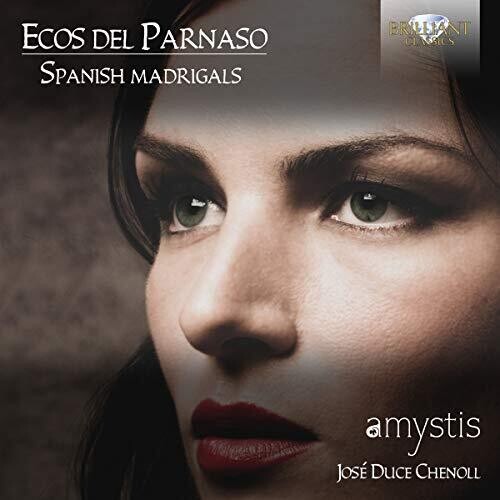
Gibbons, Monteverdi and Willaert represent the high watermark of madrigal writing in England, Italy and the Netherlands respectively. Their subtle marriage of music and text has produced enduring miniature masterpieces of love lost and found and pastoral humour. And there are no shortage of distinguished contemporaries in those countries. But Spain, the home of golden-age polyphony, also had a lively tradition of madrigal composition, too little of which is known beyond native shores. This fine new recording should address that shortcoming. In fact Spain already had a flourishing culture of secular songs in the form of villancicos when Italian composers arrived at royal courts and chapels during the 16th century and bringing with them their own traditions of popular music. Mateo Flecha 'The Younger' was a Catalan, Carmelite monk who showed himself adaptable to this Italian influence in his own book of madrigals, eventually published in Venice and excerpted here. Joan Brudieu (1520-1591) was a Frenchman also living in Catalonia who published madrigals in Spanish and Catalan (both languages represented in this collection). Even less familiar is the name of Pedro Valenzuela - his dates are lost to us - but he uses a sophisticated harmonic vocabulary with acute sensitivity to text in a trio of Italian-texted madrigals. He had emigrated to Italy as a singer at St Mark's in Venice, and he was followed by Sebastián Raval, while Stefano Limido travelled in the other direction. Thus as a whole the collection illustrates a stimulating cross-fertilisation of Spanish and Italian styles in consort music. The performances are both polished and authoritative, attentive to original sources and grounded in a thorough understanding of madrigalian style. Founded by it's director José Duce Chenoll in 2010, the Amystis ensemble already has an impressive catalogue of recordings to it's name. 'Fervently committed readings,' remarked Sir Nicholas Kenyon in The Observer of their complete Cabanilles collection.
Publisher:Alliance EntertainmentLabel:BRLTUPC:5028421959054Weight:0.22Discs:1Product ID:SC6B677J4A
Free shipping on orders over $75. Standard shipping takes 3-7 business days. Returns accepted within 30 days of purchase.