
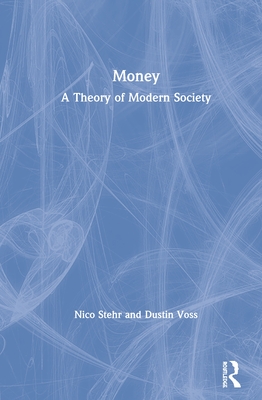
Money: A Theory of Modern Society - Hardcover
Pay over time for orders over $35.00 with
Offers & Perks
Earn 231 points with this purchase
Added to your rewards balance after checkout.
100 points welcome bonus
Create an account and start with extra points.
Since the publication of Georg Simmel's Philosophy of Money more than a century ago, social science has primarily considered money a medium of exchange. This new book treats money as a more inclusive social concept that has profoundly influenced the emergence of modern society. Money is also a moral and political category. It communicates prices and thus embodies innumerable evaluations and judgments of objects and services, of social relationships and associations.
At the same time, modern societies are undergoing fundamental transformations in which money assumes an ever-important role, while banking and financial services constitute the new primary sector of modern service economies. In this book, the authors trace the transformational scope of monetarization and financialization along the four classical productive forces--land, capital, labor, and knowledge--and evaluate the consequences of an irrepressible urge to quantify and monetarize almost everything social. What happens to a society in which the tangible products of the real economy lose their preeminent status, and everything is judged purely according to its economic value? The authors identify an increasing disconnect between market prices and social values with serious social, political, economic, and environmental consequences.
Nico Stehr was until the summer of 2018 Karl Mannheim Professor of Cultural Studies at the Zeppelin University, Friedrichshafen, Germany. He is a fellow of the Royal Society (Canada) and a fellow of the European Academy of Sciences and Arts. His research interests center on the transformation of modern societies into knowledge societies and developments associated with this transformation in different major social institutions of modern society (e.g. science, politics, governance, the economy, inequality, and globalization); in addition, his research interests concern the societal consequences of climate change. He is one of the authors of the Hartwell Paper on climate policy. Among his recent book publications are: Information, Power and Democracy (Cambridge University Press, 2016), Knowledge: Is Knowledge Power (with Marian Adolf, Routledge, 2016) and Society and Climate (with Amanda Machin, World Scientific Publishers, 2019).
Dustin Voss is PhD candidate in Political Economy at the European Institute of the London School of Economics and Political Science. His dissertation is concerned with the turn to neoliberalism and the rise of economic orthodoxy in social democratic policy making. His research interests include comparative political economy, monetary and fiscal policy, financialization, and the relationship of democracy and capitalism in advanced nations. He holds an MSc in Political Economy of Europe (with Distinction) from the LSE as well as a BA in Sociology, Politics, and Economics from Zeppelin University, Germany.
Contributor(s)
Authors
Free shipping on orders over $75. Standard shipping takes 3-7 business days. Returns accepted within 30 days of purchase.