
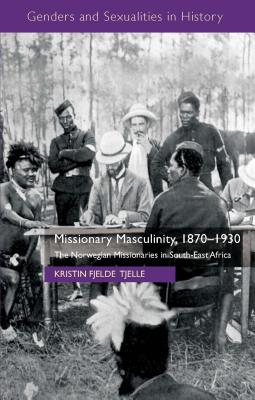
Missionary Masculinity, 1870-1930: The Norwegian Missionaries in South-East Africa - Hardcover
$108.99
$109.99
-1%Quantity
01
Pay over time for orders over $35.00 with
Offers & Perks
Earn 108 points with this purchase
Added to your rewards balance after checkout.
100 points welcome bonus
Create an account and start with extra points.
Availability:In StockContributor:Kenneth A. LoparoSeries:Genders and Sexualities in HistoryTheme:Chronological Period/19th Century, Chronological Period/20th Century, Cultural Region/African, Cultural Region/Scandinavian, Religious Orientation/ChristianPublish date:1/17/2014Pages:325
Languages:EnglishPublisher:Palgrave MacMillanISBN-13:9781137336354ISBN-10:1137336358UPC:9781137336354Book Category:HistoryBook Subcategory:Modern, EuropeBook Topic:19th Century, 20th Century, Nordic CountriesSize:8.50 x 5.50 x 1.00 inchesWeight:0.59Product ID:SCYPY8CXG3
What kind of men were missionaries? What kind of masculinity did they represent, in ideology as well as in practice? Presupposing masculinity to be a cluster of cultural ideas and social practices that change over time and space, and not a stable entity with a natural, inherent and given meaning, Kristin Fjelde Tjelle seeks to answer such questions.
Using case studies of Norwegian Mission Society members the author argues that missionary masculinity was the result of a complex dialogue between the ideals of male 'self-making' associated with the late nineteenth century and the Christian ideal of self-denial. This masculinity was also the product of the tension between male missionaries' identity as modern professional breadwinners and their identity as 'pre-modern' patriarchs whose calling demanded the integration of their private lives and their public roles as missionaries. Missionary manliness (or appropriate mission masculinity) supported the upward social mobility of Norwegian men from fairly humble backgrounds and, more importantly, gave them power - but power that was always threatened by the dangers of inappropriate mission masculinity - or unmanliness.
Using case studies of Norwegian Mission Society members the author argues that missionary masculinity was the result of a complex dialogue between the ideals of male 'self-making' associated with the late nineteenth century and the Christian ideal of self-denial. This masculinity was also the product of the tension between male missionaries' identity as modern professional breadwinners and their identity as 'pre-modern' patriarchs whose calling demanded the integration of their private lives and their public roles as missionaries. Missionary manliness (or appropriate mission masculinity) supported the upward social mobility of Norwegian men from fairly humble backgrounds and, more importantly, gave them power - but power that was always threatened by the dangers of inappropriate mission masculinity - or unmanliness.
Languages:EnglishPublisher:Palgrave MacMillanISBN-13:9781137336354ISBN-10:1137336358UPC:9781137336354Book Category:HistoryBook Subcategory:Modern, EuropeBook Topic:19th Century, 20th Century, Nordic CountriesSize:8.50 x 5.50 x 1.00 inchesWeight:0.59Product ID:SCYPY8CXG3
Kristin Fjelde Tjelle is a historian and Director of the School of Mission and Theology in Stavanger, Norway. Her research is on the Norwegian Missionary Movement in the nineteenth and twentieth century with a particular interest in missions and gender.
Publisher: Palgrave MacMillan
Edition
2014 Edition
Contributor(s)
Author
Free shipping on orders over $75. Standard shipping takes 3-7 business days. Eligible items may be returned within 30 days of delivery. Conditions apply.