
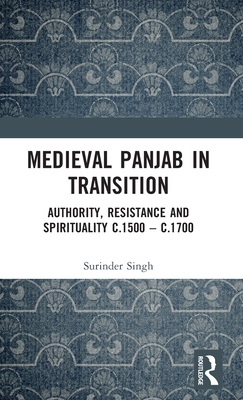
Medieval Panjab in Transition: Authority, Resistance and Spirituality C.1500 - C.1700 - Hardcover
Pay over time for orders over $35.00 with
Offers & Perks
Earn 247 points with this purchase
Added to your rewards balance after checkout.
100 points welcome bonus
Create an account and start with extra points.
This book reconstructs the historical transition in the undivided Panjab during the sixteenth and seventeenth centuries. It shows that the assertion of Mughal and Afghan suzerainty faced sustained resistance from local elements, particularly the autonomous tribes and hill chiefdoms. In central plains, Dulla Bhatti mobilized the toilers of his ancestral domain and, leading a relentless fight against the Mughal oppression, became an abiding symbol of resistance in the collective memory.
The multicultural legacy of Panjab evolved through diverse strands of spirituality. The jogis, wedded to monastic discipline, supernatural abilities and land grants, gained acceptance through their exertions for social betterment. The Sabiri and Qadiri silsilas channelized mystical urges towards the technique of prime recitation. The popular verses of Shah Husain, Baba Lal and Sultan Bahu proposed a loving relation with God. The legendary lovers, perishing in the struggles against patriarchal forces, promoted a merger of dissent with spirituality. In the city of Lahore, the material pursuits and cultural life were visible in a mosaic of descriptions, including episodes of social tension.
The book understands the upliftment of depressed castes as a defining feature of Sikhism. It places egalitarian concern of the Sikh Gurus alongside the anti-caste protests of Namdev, Kabir and Ravidas. Owing to scriptural authority and congregational equality, the members of depressed castes attained a numerical majority in the Sikh warrior bands that shook the foundations of the Mughal state. The work relies on evidence from the Persian chronicles, Mughal newsletters, Sufi writings, Sikh literature and Punjabi folklore.
Please note: Taylor & Francis does not sell or distribute the Hardback in India, Pakistan, Nepal, Bhutan, Bangladesh and Sri Lanka.
Surinder Singh has taught at the Department of History, Panjab University, Chandigarh. His last publication was The Making of Medieval Panjab: Politics, Society and Culture, c. 1000-c. 1500.
Contributor(s)
Author
Free shipping on orders over $75. Standard shipping takes 3-7 business days. Eligible items may be returned within 30 days of delivery. Conditions apply.