
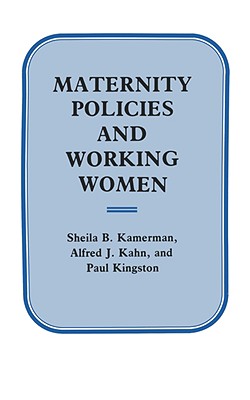
Maternity Policies and Working Women - Paperback
$39.99
Quantity
01
Pay over time for orders over $35.00 with
Offers & Perks
Earn 39 points with this purchase
Added to your rewards balance after checkout.
100 points welcome bonus
Create an account and start with extra points.
Availability:In StockContributor:Sheila B. Kamerman, Alfred J. Kahn, Paul William KingstonAudience:Young AdultPublish date:12/20/1985Pages:196
Languages:EnglishPublisher:Columbia University PressISBN-13:9780231057516ISBN-10:0231057512UPC:9780231057516Book Category:Political Science, History, Sports & RecreationBook Subcategory:Labor & Industrial Relations, United States, BaseballBook Topic:HistorySize:8.00 x 5.00 x 0.45 inchesWeight:0.218Product ID:SCB2AG8XRN
Breaking the Slump is the engrossing story of baseball during the 1930s, when the National Pastime came of age as a business, an entertainment, and a passion, and when the teams of the American and National Leagues fielded perhaps the greatest rosters in the history of the game. Whether as rookies, stars in their prime, or legends on the wane, Babe Ruth, Rogers Hornsby, Lou Gehrig, Hank Greenberg, Dizzy Dean, Ted Williams, and Joe DiMaggio all left their mark on the game and on the American imagination in the decade before America's entry into the World War II. In one remarkable year, 1934, the entire starting lineup of the American League All-Stars consisted of future Hall of Famers. This surfeit of talent provided much needed entertainment to a nation struggling through economic hardship on an enormous scale. In the face of the Great Depression, noted baseball historian Charles C. Alexander shows, Organized Baseball underwent an array of changes that defined the structure and operation of the game well into the postwar decades.The 1930s witnessed the advent of night baseball, the flowering of an extensive and, in some cases, controversial minor-league system of farm clubs, and the exploitation of the relatively new broadcast medium of radio. Power brokers such as Commissioner Kenesaw Mountain Landis and owners Branch Rickey and Colonel Jacob Ruppert oversaw these and other developments even as they retained other traditional aspects of the game. As it had since the 1880s, the reserve clause continued to limit the salaries and mobility of ballplayers, subjecting them to the will of ownership to a degree unfathomable today. And Organized Baseball remained racially segregated throughout the 1930s, as the Negro leagues operated largely beyond the notice of white baseball fans. While tracing these and other organizational developments, Alexander keeps his focus on the daily experience of the ballplayers. What was it like for young men trying to make their way as professional ballplayers in an economy that offered few prospects for them otherwise? What kind of conditions did they have to deal with in terms of playing facilities, transportation, lodging, and relations with their employers?And what about the play itself? Alexander offers an expert appraisal of how the ballplayers and the quality of the game they played differed from today's.Americans have periodically been reminded of baseball's extraordinary capacity to enrich and enliven the national spirit during hard times. Breaking the Slump is a vivid portrait of the great game and its cultural significance during America's hardest times.
Languages:EnglishPublisher:Columbia University PressISBN-13:9780231057516ISBN-10:0231057512UPC:9780231057516Book Category:Political Science, History, Sports & RecreationBook Subcategory:Labor & Industrial Relations, United States, BaseballBook Topic:HistorySize:8.00 x 5.00 x 0.45 inchesWeight:0.218Product ID:SCB2AG8XRN
Publisher: Columbia University Press
Contributor(s)
Free shipping on orders over $75. Standard shipping takes 3-7 business days. Eligible items may be returned within 30 days of delivery. Conditions apply.