
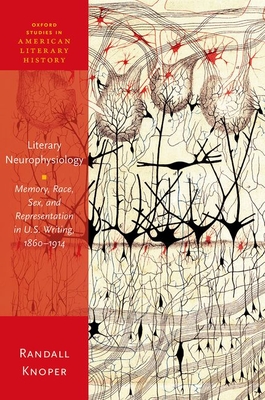
Literary Neurophysiology: Memory, Race, Sex, and Representation in U.S. Writing, 1860-1914 - Hardcover
$114.99
Quantity
01
Pay over time for orders over $35.00 with
Offers & Perks
Earn 114 points with this purchase
Added to your rewards balance after checkout.
100 points welcome bonus
Create an account and start with extra points.
Availability:In StockContributor:Randall KnoperSeries:Oxford Studies in American Literary HistoryTheme:Chronological Period/19th CenturyPublish date:12/28/2021Pages:306
Languages:EnglishPublisher:Oxford University PressISBN-13:9780192845504ISBN-10:0192845500UPC:9780192845504Book Category:Literary Criticism, MedicalBook Subcategory:Modern, History, AmericanBook Topic:19th CenturySize:9.10 x 6.10 x 1.00 inchesWeight:0.636Product ID:SCGA6W9C3D
Writing about the brain and the nervous system more than a century ago, what were U.S. authors doing? Literary Neurophysiology: Memory, Race, Sex, and Representation in U.S. Writing, 1860-1914 examines their use of literature to experiment with the new materialist psychology, a science that was challenging their capacity to represent reality and forging new understandings of race and sexuality. Late-nineteenth and eartly-twentieth century authors sometimes emulated scientific epistemology, allowing their art and conceptions of creativity to be reshaped by it, but more often they imaginatively investigated neurophysiological theories, challenging and rewriting scientific explanations of human identity and behavior. By enfolding physiological experimentation into literary inquiries that could nonreductively account for psychological and social complexities beyond the reach of the laboratory, they used literature as a cognitive medium. Mark Twain, W. D. Howells, and Gertrude Stein come together as they probe the effects on mimesis and creativity of reflex-based automatisms and unconscious meaning-making. Oliver Wendell Holmes explores conceptions of racial nerve force elaborated in population statistics and biopolitics, while W. E. B. Du Bois and Pauline Hopkins contest notions of racial energy used to predict the extinction of African Americans. Holmes explores new definitions of "sexual inversion" as, in divergent ways, Whitman and John Addington Symonds evaluate relations among nerve force, human fecundity, and the supposed grave of nonreproductive sex. Carefully tracing entanglements and conflicts between literary culture and mental science of this period, Knoper reveals unexpected connections among these authors and fresh insights into the science they confronted. Considering their writing as cognitive practice, he provides a new understanding of literary realism and of the emergent distinction between literary and scientific knowledge.
Languages:EnglishPublisher:Oxford University PressISBN-13:9780192845504ISBN-10:0192845500UPC:9780192845504Book Category:Literary Criticism, MedicalBook Subcategory:Modern, History, AmericanBook Topic:19th CenturySize:9.10 x 6.10 x 1.00 inchesWeight:0.636Product ID:SCGA6W9C3D
Randall Knoper, Associate Professor of English and Chair, Department of English, University of Massachusetts, US Randall Knoper teaches at the University of Massachusetts Amherst and is chair of the Department of English. He is the author of Acting Naturally: Mark Twain in the Culture of Performance .
Publisher: Oxford University Press
Contributor(s)
Author
Free shipping on orders over $75. Standard shipping takes 3-7 business days. Eligible items may be returned within 30 days of delivery. Conditions apply.