
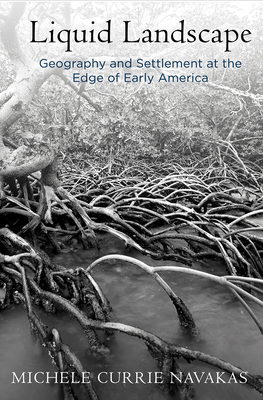
Liquid Landscape: Geography and Settlement at the Edge of Early America - Hardcover
Pay over time for orders over $35.00 with
Offers & Perks
Earn 63 points with this purchase
Added to your rewards balance after checkout.
100 points welcome bonus
Create an account and start with extra points.
In Florida, land and water frequently change places with little warning, dissolving homes and communities along with the very concepts of boundaries themselves. While Florida's landscape of saturated swamps, shifting shorelines, coral reefs, and tiny keys initially impeded familiar strategies of early U.S. settlement, such as the establishment of fixed dwellings, sturdy fences, and cultivated fields, over the course of the eighteenth and nineteenth centuries, Americans learned to inhabit Florida's liquid landscape in unconventional but no less transformative ways.
In Liquid Landscape, Michele Currie Navakas analyzes the history of Florida's incorporation alongside the development of new ideas of personhood, possession, and political identity within American letters. From early American novels, travel accounts, and geography textbooks, to settlers' guides, maps, natural histories, and land surveys, early American culture turned repeatedly to Florida's shifting lands and waters, as well as to its itinerant enclaves of Native Americans, Spaniards, pirates, and runaway slaves. This preoccupation with Floridian terrain and populations, argues Navakas, reveals a deep American concern with the challenges of settling a region so exceptional in topography, geography, and demography. Navakas reads a vast archive of popular, literary, and reference texts spanning Revolution to Reconstruction, including works by William Bartram, James Fenimore Cooper, and Harriet Beecher Stowe, to uncover an alternative history of American possession, one that did not descend exclusively, or even primarily, from the more familiar legal, political, and philosophical conceptions of American land as enduring, solid, and divisible. The shifting southern edge of early America produced a new language of settlement, belonging, territory, and sovereignty, and that language would ultimately transform how people all across the rapidly changing continent imagined the making of U.S. nation and empire.Contributor(s)
Author
Free shipping on orders over $75. Standard shipping takes 3-7 business days. Eligible items may be returned within 30 days of delivery. Conditions apply.