
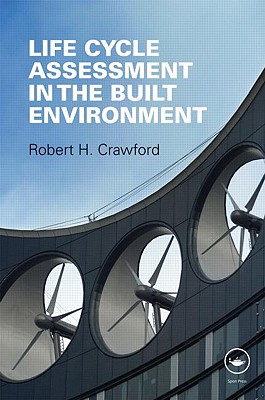
Life Cycle Assessment in the Built Environment - Hardcover
Choose Option
Hardcover

Paperback
Pay over time for orders over $35.00 with
Offers & Perks
Earn 247 points with this purchase
Added to your rewards balance after checkout.
100 points welcome bonus
Create an account and start with extra points.
Life cycle assessment enables the identification of a broad range of potential environmental impacts occurring across the entire life of a product, from its design through to its eventual disposal or reuse. The need for life cycle assessment to inform environmental design within the built environment is critical, due to the complex range of materials and processes required to construct and manage our buildings and infrastructure systems.
After outlining the framework for life cycle assessment, this book uses a range of case studies to demonstrate the innovative input-output-based hybrid approach for compiling a life cycle inventory. This approach enables a comprehensive analysis of a broad range of resource requirements and environmental outputs so that the potential environmental impacts of a building or infrastructure system can be ascertained. These case studies cover a range of elements that are part of the built environment, including a residential building, a commercial office building and a wind turbine, as well as individual building components such as a residential-scale photovoltaic system.
Comprehensively introducing and demonstrating the uses and benefits of life cycle assessment for built environment projects, this book will show you how to assess the environmental performance of your clients' projects, to compare design options across their entire life and to identify opportunities for improving environmental performance.
Robert H. Crawford is a Research Fellow in the Faculty of Architecture, Building and Planning at the University of Melbourne. He has broad research expertise in sustainable design and construction within the built environment, the development and application of life cycle assessment and the environmental assessment of renewable energy technologies. He is also an expert in modelling indirect environmental impacts.
Contributor(s)
Author
Free shipping on orders over $75. Standard shipping takes 3-7 business days. Eligible items may be returned within 30 days of delivery. Conditions apply.