
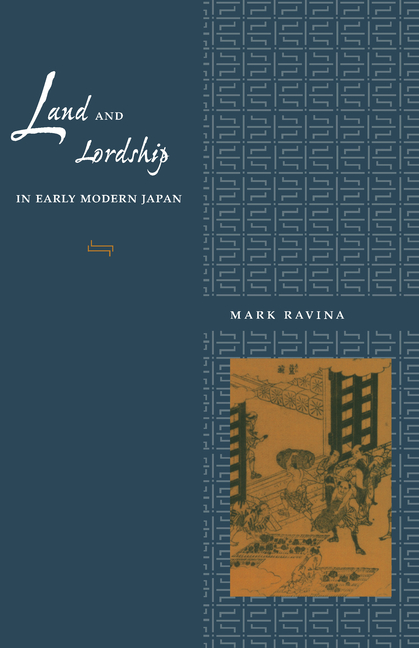
Land and Lordship in Early Modern Japan - Hardcover
Pay over time for orders over $35.00 with
Offers & Perks
Earn 67 points with this purchase
Added to your rewards balance after checkout.
100 points welcome bonus
Create an account and start with extra points.
Examining local politics in three Japanese domains (Yonezawa, Tokushima, and Hirosaki), this book shows how warlords (daimyo) and their samurai adapted the theory and practice of warrior rule to the peacetime challenges of demographic change and rapid economic growth in the mid-Tokugawa period.
The author has a dual purpose. The first is to examine the impact of shogunate/domain relations on warlord legitimacy. Although the shogunate had supreme power in foreign and military affairs, it left much of civil law in the hands of warlords. In this civil realm, Japan resembled a federal union (or "compound state"), with the warlords as semi-independent sovereigns, rather than a unified kingdom with the shogunate as sovereign. The warlords were thus both vassals of the shogun and independent lords. In the process of his analysis, the author puts forward a new theory of warlord legitimacy in order to explain the persistence of their autonomy in civil affairs.
The second purpose is to examine the quantitative dimension of warlord rule. Daimyo, the author argues, struggled against both economic and demographic pressures. It is in these struggles that domains manifested most clearly their autonomy, developing distinctive regional solutions to the problems of protoindustrialization and peasant depopulation. In formulating strategies to promote and control economic growth and to increase the peasant population, domains drew heavily on their claims to semisovereign authority and developed policies that anticipated practices of the Meiji state.
Contributor(s)
Author
Free shipping on orders over $75. Standard shipping takes 3-7 business days. Eligible items may be returned within 30 days of delivery. Conditions apply.