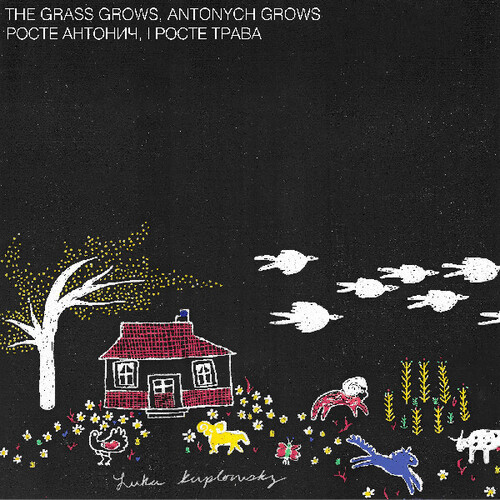
Luka Kuplowsky's voice is a paradox at times it sounds too hushed to be captured, as if it's going to disappear like smoke, then in the next instant it's as big as the sky. It is a voice that bends the ear to listen and whose music carves out a unique space for poetic language and improvisatory playfulness. In the last half-decade his songwriting has blossomed into a kaleidoscope of sounds that hinge on the interval between genres; somewhere between folk, jazz, ambient, blues, avant-pop and electronic. His latest release "The Grass Grows, Antonych Grows (????? ???????, ? ????? ?????) adapts Ukrainian poet Bohdan Ihor Antonych (1909-1937) to song, placing his poetry into a world of surreal and sensuous sonics. Kuplowsky wrote the record in what he described as a trance state, simultaneously writing and tracking a version of the album over six days, arranging and collaging Antonych's poetry into song on his Yamaha PSR. Bringing the songs to his collaborators months later, the record opened into a wide scope of jazz, new age and cosmic balladry. While Kuplowsky's 2024 album "How Can I Possibly Sleep When There Is Music" embraced process in the web of poetic connection that arose in interpreting the poems of Zen Buddhist poet Ryokan Taigu, "The Grass Grows..." narrows it's focus, drawing upon Antonych's poetry to explore his philosophical preoccupations with Lemko paganism, modernist poetry, and a metaphysics concerned with a search for eternity. If "How Can I Possibly Sleep..." stretched out from Ryokan towards a millenia of poets, here Antonych's poems are a vehicle for stretching out towards everything, taking in plants, the solar-system, bugs and the cosmos. Antonych offers a song of transcendence, earthly and spiritual. And Kuplowsky, a century later, enters the cyclical stream of Antonych's mythopoetic travels.