
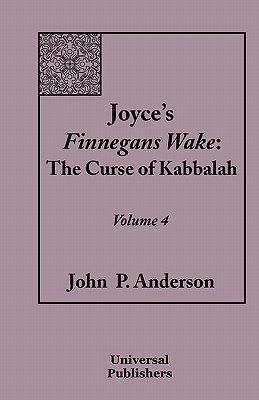
Joyce's Finnegans Wake: The Curse of Kabbalah Volume 4 - Paperback
$45.99
$49.95
-8%Quantity
01
Pay over time for orders over $35.00 with
Offers & Perks
Earn 45 points with this purchase
Added to your rewards balance after checkout.
100 points welcome bonus
Create an account and start with extra points.
Availability:In StockContributor:John P. AndersonTheme:Cultural Region/British, Religious Orientation/JewishPublish date:11/15/2010Pages:462
Languages:EnglishPublisher:Universal PublishersISBN-13:9781599428109ISBN-10:1599428105UPC:9781599428109Book Category:Study Aids, Literary Criticism, ReligionBook Subcategory:Book Notes, English, Irish, Scottish, Welsh, JudaismBook Topic:Kabbalah & MysticismSize:8.50 x 5.50 x 0.93 inchesWeight:0.531Product ID:SC8VMTKQN7
This fourth in a series continues this non-academic author's ground-breaking word by word analysis of James Joyce's Finnegans Wake. This volume covers all of chapters 1.7, 1.8 and 2.1 with the intent to explore them as art objects. In chapters 1.7 and 1.8 Aesthetics meets Theosophy meets Metaphysics. Together they share a common subject-how one part or whole treats another part. These two chapters move from shun to share, hurt to help, male to female. In aesthetics, from bad art to good art. In theosophy, from TZTZ god to ES god. In metaphysics a la Arthur Schopenhauer, from male to female aspects of Will. Featuring an all male cast, chapter 1.7 is a stinging criticism of Shem by Shaun-brother against brother. Chapter 1.7 is intentionally bad art. In aesthetic terms, the whole of the chapter is at odds with the parts and the parts at odds with other parts. With an all female cast, chapter 1.8 features a young washerwoman and old washerwoman washing clothes and talking together across a river. The main point is that they are working together, and Old shares knowledge of the eternal feminine with Young. Sharing replaces shunning. Part helps part. Chapter 1.8 is intentionally divine art. Chapter 2.1 starts Part II that features the Earwicker children, the human expression of the death defying new. As children, they come with the potential for new possibilities. Initially, however, their realization is limited by youth, when they are more under instinct-based and parental control than under self-control. Chapter 2.1 features a children's game fueled by immature sexual intoxication and loss of self-control. Joyce presents this come-on game in the rhythms and rhymes of children's stories, poems and songs, that is in children's art limited by the purpose to please a young mind. Chapter 2.1 takes the form of a play. The action in the play is the children's game. It is a play about play. With drama in the structure, Joyce weaves Macbeth into the chapter and like Shakespeare's bearded witches, boils the pot with male and female. Hermetic magic supplies the metaphors and concepts for chapter 2.1. Hermetic magic is the art of accessing the celestial force field known as the Astral Light. In order to have strong magic the magus must be in equilibrium and must know him or herself. Magus Joyce notes that these same requirements are necessary for the highest art.
Languages:EnglishPublisher:Universal PublishersISBN-13:9781599428109ISBN-10:1599428105UPC:9781599428109Book Category:Study Aids, Literary Criticism, ReligionBook Subcategory:Book Notes, English, Irish, Scottish, Welsh, JudaismBook Topic:Kabbalah & MysticismSize:8.50 x 5.50 x 0.93 inchesWeight:0.531Product ID:SC8VMTKQN7
Free shipping on orders over $75. Standard shipping takes 3-7 business days. Eligible items may be returned within 30 days of delivery. Conditions apply.