
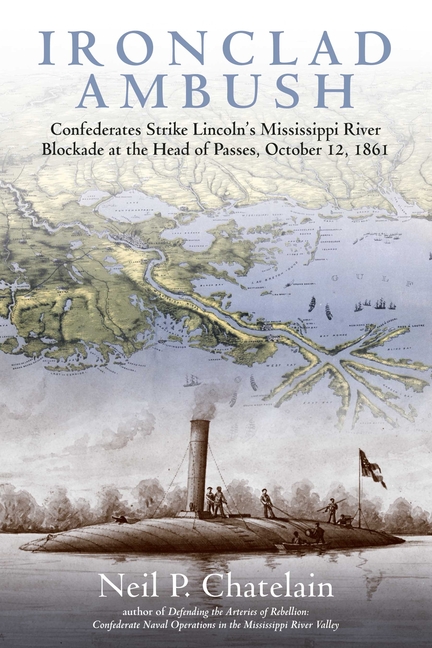
Ironclad Ambush: Confederates Strike Lincoln's Mississippi River Blockade at the Head of Passes, October 12, 1861 - Hardcover
$23.99
$32.95
-27%Quantity
01
Pay over time for orders over $35.00 with
Offers & Perks
Earn 23 points with this purchase
Added to your rewards balance after checkout.
100 points welcome bonus
Create an account and start with extra points.
Availability:In StockContributor:Neil P. ChatelainTheme:Chronological Period/1851-1899, Cultural Region/South, Topical/Civil WarPublish date:8/15/2026Pages:288
Languages:EnglishPublisher:Savas BeatieISBN-13:9781611217957ISBN-10:1611217954UPC:9781611217957Book Category:HistoryBook Subcategory:United States, MilitaryBook Topic:Civil War Period (1850-1877), Civil Wars, NavalSize:9.10 x 6.10 x 0.90 inchesWeight:0.545Product ID:SC2J9EKVD3
A detailed investigative recount of the Head of Passes engagement reveals how early Civil War naval innovation, miscommunication, and tactical decisions shaped a pivotal riverine clash and its broader implications for blockade strategy.
In early October 1861, United States warships entered the Head of Passes, where the Mississippi River's multiple entrances converge into a single channel. The occupation simplified the blockade by enabling a handful of ships to seal off the "father of waters" and cut off supplies to New Orleans. Confederate Capt. George N. Hollins recognized the danger, assembled a makeshift flotilla, and launched a surprise attack on these enemy vessels. Award-winning historian Neil P. Chatelain's Ironclad Ambush: Confederates Strike Lincoln's Mississippi River Blockade at the Head of Passes, October 12, 1861, is the first book-length treatment of this pivotal naval action.
The Battle of the Head of Passes marked the Civil War's first major fleet engagement. The Southern privateer ironclad ram Manassas smashed into USS Richmond, and as the Federals retreated toward the Gulf of Mexico, two blockaders ran aground and crews abandoned ship as Confederate gunboats closed in. The clash represented the Confederacy's first major naval victory, the first use of an ironclad in North American waters, and the first direct challenge to President Lincoln's blockade.
The action quickly became mired in confusion and conflicting accounts. Outdated technologies--sailing ships, fire rafts, and rams--collided with modern innovations like screw-propelled steamers, telegraph communications, and ironclads. The fog of war led officers and enlisted men to misinterpret orders, and many historians have misinterpreted the facts. Some commanders excelled and earned promotions, while others faltered, appeared drunk, or suffered breakdowns.
Lingering questions persist: Why did U.S. forces initially enter the Head of Passes? Why did Hollins seek to counter them? Which ships were involved? Why did two blockading crews abandon their vessels mid-battle? Why did the Confederates withdraw yet claim victory? Why does this seemingly minor and often overlooked engagement matter?
Chatelain's Ironclad Ambush scrutinizes every previous account, firsthand archival material, and period newspapers to draw upon voices from all sides--including ship captains, junior officers, enlisted sailors, lighthouse keepers, and civilians across southeastern Louisiana. Like a detective, he unravels the complexities and contradictions of early Civil War coastal and riverine naval operations and places them within the context of the war. Everyone with an interest in the Civil War in general, and naval warfare in particular, will find this book invaluable.
In early October 1861, United States warships entered the Head of Passes, where the Mississippi River's multiple entrances converge into a single channel. The occupation simplified the blockade by enabling a handful of ships to seal off the "father of waters" and cut off supplies to New Orleans. Confederate Capt. George N. Hollins recognized the danger, assembled a makeshift flotilla, and launched a surprise attack on these enemy vessels. Award-winning historian Neil P. Chatelain's Ironclad Ambush: Confederates Strike Lincoln's Mississippi River Blockade at the Head of Passes, October 12, 1861, is the first book-length treatment of this pivotal naval action.
The Battle of the Head of Passes marked the Civil War's first major fleet engagement. The Southern privateer ironclad ram Manassas smashed into USS Richmond, and as the Federals retreated toward the Gulf of Mexico, two blockaders ran aground and crews abandoned ship as Confederate gunboats closed in. The clash represented the Confederacy's first major naval victory, the first use of an ironclad in North American waters, and the first direct challenge to President Lincoln's blockade.
The action quickly became mired in confusion and conflicting accounts. Outdated technologies--sailing ships, fire rafts, and rams--collided with modern innovations like screw-propelled steamers, telegraph communications, and ironclads. The fog of war led officers and enlisted men to misinterpret orders, and many historians have misinterpreted the facts. Some commanders excelled and earned promotions, while others faltered, appeared drunk, or suffered breakdowns.
Lingering questions persist: Why did U.S. forces initially enter the Head of Passes? Why did Hollins seek to counter them? Which ships were involved? Why did two blockading crews abandon their vessels mid-battle? Why did the Confederates withdraw yet claim victory? Why does this seemingly minor and often overlooked engagement matter?
Chatelain's Ironclad Ambush scrutinizes every previous account, firsthand archival material, and period newspapers to draw upon voices from all sides--including ship captains, junior officers, enlisted sailors, lighthouse keepers, and civilians across southeastern Louisiana. Like a detective, he unravels the complexities and contradictions of early Civil War coastal and riverine naval operations and places them within the context of the war. Everyone with an interest in the Civil War in general, and naval warfare in particular, will find this book invaluable.
Languages:EnglishPublisher:Savas BeatieISBN-13:9781611217957ISBN-10:1611217954UPC:9781611217957Book Category:HistoryBook Subcategory:United States, MilitaryBook Topic:Civil War Period (1850-1877), Civil Wars, NavalSize:9.10 x 6.10 x 0.90 inchesWeight:0.545Product ID:SC2J9EKVD3
Chatelain, Neil P.: - Neil P. Chatelain is an associate professor of history at Lone Star College-North Harris, in greater Houston, Texas. A U.S. Navy veteran and historian for Emerging Civil War, Neil has written numerous books focusing on naval activity of the Civil War. His book Treasure and Empire in the Civil War won the A. M. Pate Jr. Award in Civil War History.
Publisher: Savas Beatie
Contributor(s)
Author
Free shipping on orders over $75. Standard shipping takes 3-7 business days. Eligible items may be returned within 30 days of delivery. Conditions apply.