
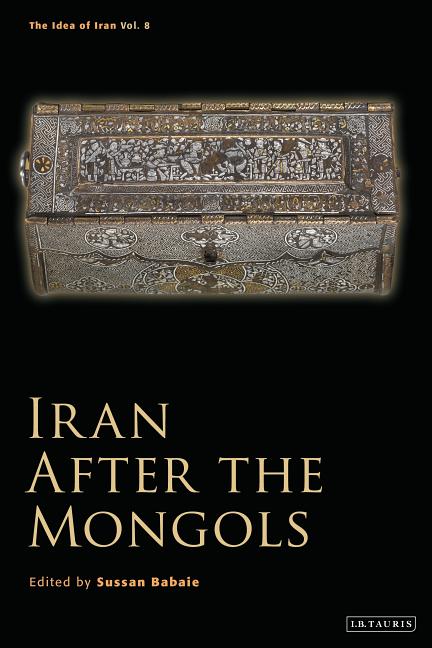
Iran After the Mongols - Hardcover
$87.99
Quantity
01
Pay over time for orders over $35.00 with
Offers & Perks
Earn 87 points with this purchase
Added to your rewards balance after checkout.
100 points welcome bonus
Create an account and start with extra points.
Availability:In StockContributor:Sussan BabaieSeries:Idea of IranTheme:Chronological Period/Medieval (500-1453) Studies, Cultural Region/Middle Eastern, Religious Orientation/IslamicPublish date:6/27/2019Pages:320
Languages:EnglishPublisher:Bloomsbury Publishing PLCISBN-13:9781788315289ISBN-10:1788315286UPC:9781788315289Book Category:History, Religion, Social ScienceBook Subcategory:Middle East, Islam, Islamic StudiesBook Topic:IranSize:9.30 x 6.10 x 1.10 inchesWeight:0.658Product ID:SC4YXKQGG7
Following the devastating Mongol conquest of Baghdad in 1258, the domination of the Abbasids declined leading to successor polities, chiefly among them the Ilkhanate in Greater Iran, Iraq and the Caucasus. Iranian cultural identities were reinstated within the lands that make up today's Iran, including the area of greater Khorasan. The Persian language gained unprecedented currency over Arabic and new buildings and manuscripts were produced for princely patrons with aspirations to don the Iranian crown of kingship.
This new volume in "The Idea of Iran" series follows the complexities surrounding the cultural reinvention of Iran after the Mongol invasions, but the book is unique capturing not only the effects of Mongol rule but also the period following the collapse of Mongol-based Ilkhanid rule. By the mid-1330s the Ilkhanate in Iran was succeeded by alternative models of authority and local Iranian dynasties. This led to the proliferation of diverse and competing cultural, religious and political practices but so far scholarship has neglected to produce an analysis of this multifaceted history in any depth. Iran After the Mongols offers new and cutting-edge perspectives on what happened. Analysing the fourteenth century in its own right, Sussan Babaie and her fellow contributors capture the cultural complexity of an era that produced some of the most luminous masterpieces in Persian literature and the most significant new building work in Tabriz, Yazd, Herat and Shiraz. Featuring contributions by leading scholars, this is a wide-ranging treatment of an under-researched period and the volume will be essential reading for scholars of Iranian Studies and Middle Eastern History.
This new volume in "The Idea of Iran" series follows the complexities surrounding the cultural reinvention of Iran after the Mongol invasions, but the book is unique capturing not only the effects of Mongol rule but also the period following the collapse of Mongol-based Ilkhanid rule. By the mid-1330s the Ilkhanate in Iran was succeeded by alternative models of authority and local Iranian dynasties. This led to the proliferation of diverse and competing cultural, religious and political practices but so far scholarship has neglected to produce an analysis of this multifaceted history in any depth. Iran After the Mongols offers new and cutting-edge perspectives on what happened. Analysing the fourteenth century in its own right, Sussan Babaie and her fellow contributors capture the cultural complexity of an era that produced some of the most luminous masterpieces in Persian literature and the most significant new building work in Tabriz, Yazd, Herat and Shiraz. Featuring contributions by leading scholars, this is a wide-ranging treatment of an under-researched period and the volume will be essential reading for scholars of Iranian Studies and Middle Eastern History.
Languages:EnglishPublisher:Bloomsbury Publishing PLCISBN-13:9781788315289ISBN-10:1788315286UPC:9781788315289Book Category:History, Religion, Social ScienceBook Subcategory:Middle East, Islam, Islamic StudiesBook Topic:IranSize:9.30 x 6.10 x 1.10 inchesWeight:0.658Product ID:SC4YXKQGG7
Sussan Babaie is Andrew W. Mellon Reader in the Arts of Iran and Islam at The Courtauld Institute of Art, London. She has previously taught and resesarched at Smith College, the University of Michigan and as the Allianz Visiting Professor at Ludwig Maximilian University, Munich.Her exhibitions include the guest-curated Strolling in Isfahan at the Sackler Museum of Harvard University and she is the co-editor of Persian Kingship and Architecture (I.B.Tauris, 2015) and the award-winning monograph, Isfahan and its Palaces: Statecraft, Shiism and the Architecture of Conviviality in Early Modern Iran.
Publisher: Bloomsbury Publishing PLC
Contributor(s)
Free shipping on orders over $75. Standard shipping takes 3-7 business days. Eligible items may be returned within 30 days of delivery. Conditions apply.