
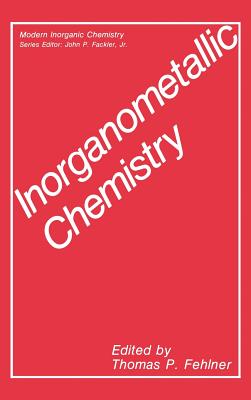
Inorganometallic Chemistry - Hardcover
$168.99
$169.99
-1%Quantity
01
Pay over time for orders over $35.00 with
Offers & Perks
Earn 168 points with this purchase
Added to your rewards balance after checkout.
100 points welcome bonus
Create an account and start with extra points.
Availability:In StockContributor:Thomas P. FehlnerSeries:Modern Inorganic ChemistryPublish date:6/30/1992Pages:401
Languages:EnglishPublisher:SpringerISBN-13:9780306439865ISBN-10:0306439867UPC:9780306439865Book Category:ScienceBook Subcategory:Chemistry, Spectroscopy & Spectrum Analysis, PhysicsBook Topic:Inorganic, Condensed MatterSize:9.00 x 6.00 x 1.06 inchesWeight:0.79Product ID:SC35E5HP41
There is a certain fascination associated with words. The manipulation of strings of symbols according to mutually accepted rules allows a language to express history as well as to formulate challenges for the future. But language changes as old words are used in a new context and new words are created to describe changing situations. How many words has the computer revolution alone added to languages? "Inorganometallic" is a word you probably have never encountered before. It is one created from old words to express a new presence. A strange sounding word, it is also a term fraught with internal contradiction caused by the accepted meanings of its constituent parts. "In- organic" is the name of a discipline of chemistry while "metallic" refers to a set of elements constituting a subsection of that discipline. Why then this Carrollian approach to entitling a set of serious academic papers? Organic, the acknowledged doyenne of chemistry, is distinguished from her brother, inorganic, by the prefix "in," i. e., he gets everything not organic. Organometallic refers to compounds with carbon-metal bonds. It is simple! Inorganometallic is everything else, i. e., compounds with noncarbon-metal element bonds. But why a new term? Is not inorganic sufficient? By virtue of training, limited time, resources, co-workers, and so on, chemists tend to work on a specific element class, on a particular compound type, or in a particular phase. Thus, one finds element-oriented chemists (e. g.
Languages:EnglishPublisher:SpringerISBN-13:9780306439865ISBN-10:0306439867UPC:9780306439865Book Category:ScienceBook Subcategory:Chemistry, Spectroscopy & Spectrum Analysis, PhysicsBook Topic:Inorganic, Condensed MatterSize:9.00 x 6.00 x 1.06 inchesWeight:0.79Product ID:SC35E5HP41
Publisher: Springer
Edition
1992 Edition
Contributor(s)
Free shipping on orders over $75. Standard shipping takes 3-7 business days. Returns accepted within 30 days of purchase.