
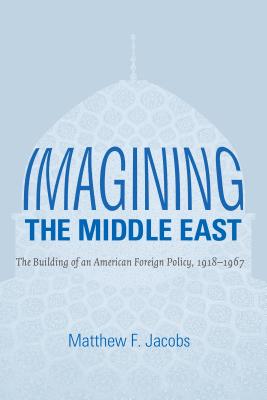
Imagining the Middle East: The Building of an American Foreign Policy, 1918-1967 - Paperback
$39.99
Quantity
01
Pay over time for orders over $35.00 with
Offers & Perks
Earn 39 points with this purchase
Added to your rewards balance after checkout.
100 points welcome bonus
Create an account and start with extra points.
Availability:In StockContributor:Matthew F. JacobsTheme:Aspects (Academic)/Historical, Chronological Period/1900-1949, Chronological Period/1950's, Chronological Period/1960's, Chronological Period/20th Century, Cultural Region/Middle EasternPublish date:8/1/2014Pages:336
Languages:EnglishPublisher:University of North Carolina PressISBN-13:9781469619095ISBN-10:1469619091UPC:9781469619095Book Category:History, Political ScienceBook Subcategory:Middle East, International Relations, United StatesBook Topic:20th CenturySize:9.20 x 6.00 x 1.00 inchesWeight:0.499Product ID:SCJPVZB944
As its interests have become deeply tied to the Middle East, the United States has long sought to develop a usable understanding of the people, politics, and cultures of the region. In Imagining the Middle East, Matthew Jacobs illuminates how Americans' ideas and perspectives about the region have shaped, justified, and sustained U.S. cultural, economic, military, and political involvement there.
Jacobs examines the ways in which an informal network of academic, business, government, and media specialists interpreted and shared their perceptions of the Middle East from the end of World War I through the late 1960s. During that period, Jacobs argues, members of this network imagined the Middle East as a region defined by certain common characteristics -- religion, mass politics, underdevelopment, and an escalating Arab-Israeli-Palestinian conflict -- and as a place that might be transformed through U.S. involvement. Thus, the ways in which specialists and policymakers imagined the Middle East of the past or present came to justify policies designed to create an imagined Middle East of the future. Jacobs demonstrates that an analysis of the intellectual roots of current politics and foreign policy is critical to comprehending the styles of U.S. engagement with the Middle East in a post-9/11 world.
Jacobs examines the ways in which an informal network of academic, business, government, and media specialists interpreted and shared their perceptions of the Middle East from the end of World War I through the late 1960s. During that period, Jacobs argues, members of this network imagined the Middle East as a region defined by certain common characteristics -- religion, mass politics, underdevelopment, and an escalating Arab-Israeli-Palestinian conflict -- and as a place that might be transformed through U.S. involvement. Thus, the ways in which specialists and policymakers imagined the Middle East of the past or present came to justify policies designed to create an imagined Middle East of the future. Jacobs demonstrates that an analysis of the intellectual roots of current politics and foreign policy is critical to comprehending the styles of U.S. engagement with the Middle East in a post-9/11 world.
Languages:EnglishPublisher:University of North Carolina PressISBN-13:9781469619095ISBN-10:1469619091UPC:9781469619095Book Category:History, Political ScienceBook Subcategory:Middle East, International Relations, United StatesBook Topic:20th CenturySize:9.20 x 6.00 x 1.00 inchesWeight:0.499Product ID:SCJPVZB944
Jacobs, Matthew F.: - Matthew F. Jacobs is associate professor of history at the University of Florida.
Publisher: University of North Carolina Press
Contributor(s)
Author
Free shipping on orders over $75. Standard shipping takes 3-7 business days. Eligible items may be returned within 30 days of delivery. Conditions apply.