
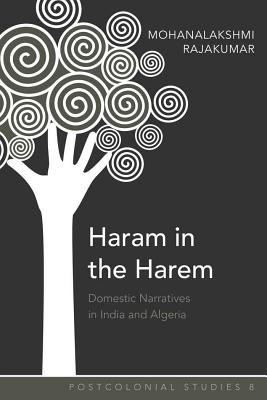
Haram in the Harem: Domestic Narratives in India and Algeria - Hardcover
$102.99
Quantity
01
Pay over time for orders over $35.00 with
Offers & Perks
Earn 102 points with this purchase
Added to your rewards balance after checkout.
100 points welcome bonus
Create an account and start with extra points.
Availability:In StockContributor:Maria C. Zamora, Mohanalakshmi RajakumarSeries:Postcolonial StudiesTheme:Interdisciplinary Studies/Islamic Studies, Sex & Gender/FemininePublish date:7/15/2009Pages:119
Languages:EnglishPublisher:Peter Lang Inc., International Academic PubliISBN-13:9781433107122ISBN-10:1433107120UPC:9781433107122Book Category:Religion, Social Science, Language StudyBook Subcategory:Christianity, Cultural & Ethnic Studies, MiscellaneousBook Topic:Literature & the ArtsSize:9.21 x 6.14 x 0.38 inchesWeight:0.368Product ID:SC2YAMJ715
Haram in the Harem focuses on the differences in nationalist discourse regarding women and the way female writers conceptualized the experience of women in three contexts: the middle-class Muslim reform movement, the Algerian Revolution, and the Partition of India. During each of these periods the subject of women, their behavior, bodies, and dress were discussed by male scholars, politicians, and revolutionaries. The resonating theme amongst these disparate events is that women were believed to be best protected when they were ensconced within their homes and governed by their families, particularly male authority, whether they were fathers, brothers, or husbands. The threat to national identity was often linked to the preservation of womanly purity. Yet for the writers of this study, Ismat Chughtai (1915-1991), Assia Djebar (1936-), and Khadija Mastur (1927-1982), the danger to women was not in the public sphere but embedded within a domestic hierarchy enforced by male privilege. In their fictional texts, each writer shows how women resist, subvert, and challenge the normative behaviors prescribed in masculine discourse. In their writings they highlight the different ways women negotiated private spaces between intersecting masculine hegemonies of power including colonialism and native patriarchy. They demonstrate distinct literary viewpoints of nation, home, and women's experiences at particular historical moments. The choice of these various texts reveals how fiction provided a safe space for female writers to contest traditional systems of power. Bringing into focus the voices and experiences of women - who existed as limited cultural icons in the nationalist discourse - is a common theme throughout the selected stories. This book showcases the fluidity of literature as a response to the intersections of gender, race, and nation.
Languages:EnglishPublisher:Peter Lang Inc., International Academic PubliISBN-13:9781433107122ISBN-10:1433107120UPC:9781433107122Book Category:Religion, Social Science, Language StudyBook Subcategory:Christianity, Cultural & Ethnic Studies, MiscellaneousBook Topic:Literature & the ArtsSize:9.21 x 6.14 x 0.38 inchesWeight:0.368Product ID:SC2YAMJ715
The Author: Mohanalakshmi Rajakumar is a writer, educator, and scholar of literature. She has a Ph.D. from the University of Florida with a focus on gender and postcolonial theory. She publishes short stories, academic articles, and travel essays in a variety of journals and literary magazines. Rajakumar also reviews audio books for Audiofile Magazine and regularly contributes to Woman Today. She is currently working on a collection of essays related to her experiences as a female South Asian American living in the Arabian Gulf. Rajakumar is the Reading and Writing Development Director for the joint venture, Bloomsbury Qatar Foundation Publishing based in Doha, Qatar.
Publisher: Peter Lang Inc., International Academic Publi
Contributor(s)
Author
Free shipping on orders over $75. Standard shipping takes 3-7 business days. Eligible items may be returned within 30 days of delivery. Conditions apply.