
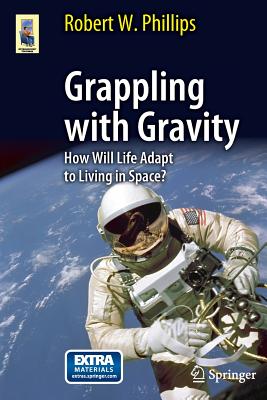
Grappling with Gravity: How Will Life Adapt to Living in Space? - Paperback
$27.99
$37.99
-26%Quantity
01
Pay over time for orders over $35.00 with
Offers & Perks
Earn 27 points with this purchase
Added to your rewards balance after checkout.
100 points welcome bonus
Create an account and start with extra points.
Availability:In StockContributor:Robert W. PhillipsSeries:Astronomers' UniverseTheme:Aspects (Academic)/Science/Technology AspectsPublish date:10/8/2011Pages:271
Grappling with Gravity explores the physiological changes that will occur in humans and the plants and animals that accompany humans as we move to new worlds, be it to colony in the emptiness of space or settlements on the Moon, Mars, or other moons or planets. This book focuses on the biomedical aspects, while not ignoring other life-changing influences of space living. For example, what happens to people physiologically in the microgravity of space, where weight and the direction "up" become meaningless? Adapting to microgravity represents the greatest environmental challenge that life will have encountered since our ancestors moved from the seas to solid Earth. Away from Earth the human body will begin almost immediately to adapt and change, to be able to function in these strange environments. As a person adapts in space he or she will become less fit to live on Earth.
Robert Phillips is a veterinarian and has also a doctorate in Physiology/Nutrition. He taught and conducted research at Colorado State University until 1984, when he was selected by NASA to fly on the"Spacelab Life Sciences 1," the first shuttle mission devoted to biomedical research. Ten months prior to launch Phillips had to remove himself from flight status due to a medical condition. He supported the mission from the payload operations control center. Following the mission, Phillips served for three years at NASA HQ as the Space Station Chief Scientist during the station's design phase. He then joined the NASA Life Sciences Education and Outreach program for 10 years, presenting seminars and workshops to teachers, students, and the public about the effects of spaceflight on life.
Publisher: Springer
Edition
2012 Edition
Contributor(s)
Author
Free shipping on orders over $75. Standard shipping takes 3-7 business days. Eligible items may be returned within 30 days of delivery. Conditions apply.