
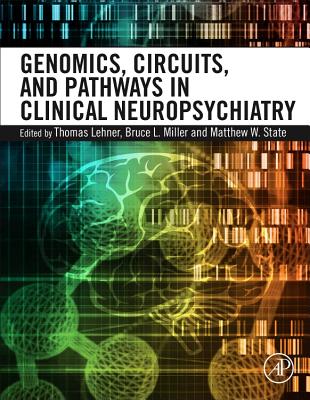
Genomics, Circuits, and Pathways in Clinical Neuropsychiatry - Hardcover
Pay over time for orders over $35.00 with
Offers & Perks
Earn 192 points with this purchase
Added to your rewards balance after checkout.
100 points welcome bonus
Create an account and start with extra points.
This foundational work comprehensively examines the current state of the genetics, genomics and brain circuitry of psychiatric and neurological disorders. It consolidates discoveries of specific genes and genomic regions associated with these conditions, the genetic and anatomic architecture of these syndromes, and addresses how recent advances in genomics are leading to a reappraisal of the biology underlying clinical neuroscience. In doing so, it critically examines the promise and limitations of these discoveries toward treatment, and to the interdisciplinary nature of understanding brain and behavior. Coverage includes new discoveries regarding autism, epilepsy, intellectual disability, dementias, movement disorders, language impairment, disorders of attention, schizophrenia, and bipolar disorder. Genomics, Circuits, and Pathways in Clinical Neuropsychiatry focuses on key concepts, challenges, findings, and methods in genetics, genomics, molecular pathways, brain circuitry, and related neurobiology of neurologic and psychiatric disorders.
Dr. Miller holds the A.W. and Mary Margaret Clausen Distinguished Professorship in Neurology at the University of California, San Francisco (UCSF). He directs the busy UCSF dementia center where patients in the San Francisco Bay Area and beyond receive comprehensive clinical evaluations. His goal is the delivery of model care to all of the patients who enter the clinical and research programs at the UCSF Memory and Aging Center (MAC).
Dr. Miller is a behavioral neurologist focused on dementia with special interests in brain and behavior relationships as well as the genetic and molecular underpinnings of disease. His work in frontotemporal dementia (FTD) emphasizes both the behavioral and emotional deficits that characterize these patients, while simultaneously noting the visual creativity that can emerge in the setting of FTD. He is the principal investigator of the NIH-sponsored Alzheimer's Disease Research Center (ADRC) and program project on FTD called Frontotemporal Dementia: Genes, Imaging and Emotions. He oversees a healthy aging program, which includes an artist in residence program. In addition, he helps lead two philanthropy-funded research consortia, the Tau Consortium and Consortium for Frontotemporal Research, focused on developing treatments for tau and progranulin disorders, respectively. Also, he works with the National Football League to help with the education and assessment of players related to brain health. Dr. Miller teaches extensively, runs the Behavioral Neurology Fellowship at UCSF, and oversees visits of more than 50 foreign scholars every year.
Dr. Miller has received many awards including the Potamkin Award from the American Academy of Neurology, the Raymond Adams Lecture at the American Neurological Association, the Elliot Royer Award from the San Francisco Neurological community, the UCSF Annual Faculty Research Lectureship in Clinical Science, the UCSF Academic Senate Distinction in Mentoring Award, Distinguished Service to Minorities, from Charles Drew University, and the Gene D. Cohen Research Award in Creativity and Aging from the National Center for Creative Aging. He has authored The Human Frontal Lobes, The Behavioral Neurology of Dementia, Frontotemporal Dementia and over 600 other publications regarding dementia. He has been featured in Fortune magazine and The New York Times, as well as on "Charlie Rose," "PBS NewsHour" and other media. For more than three decades, Dr. Miller has been the scientific director for the philanthropic organization The John Douglas French Alzheimer's Foundation, a private philanthropic organization that funds basic science research in Alzheimer's disease.
State, Matthew W.: - Matthew W. State MD, PhD, is a child psychiatrist and human geneticist studying pediatric neuropsychiatric syndromes. His lab focuses on gene discovery as a launching point for efforts to illuminate the biology of these conditions and to develop novel and more effective therapies.Dr. State received his undergraduate and medical degrees at Stanford University, completed his residency in psychiatry and fellowship in child psychiatry at the UCLA Neuropsychiatric Institute, and earned a PhD in genetics from Yale University. He was on the faculty at Yale from 2001 to 2013 where he was the Donald J. Cohen Professor of Child Psychiatry, Psychiatry and Genetics and the Co-Founder and Co-Director of the Yale Program on Neurogenetics. He is currently the Oberndorf Family Distinguished Professor and Chair of Psychiatry at UCSF and Director of the Langley Porter Psychiatric Institute and Hospital.
Contributor(s)
Free shipping on orders over $75. Standard shipping takes 3-7 business days. Eligible items may be returned within 30 days of delivery. Conditions apply.