
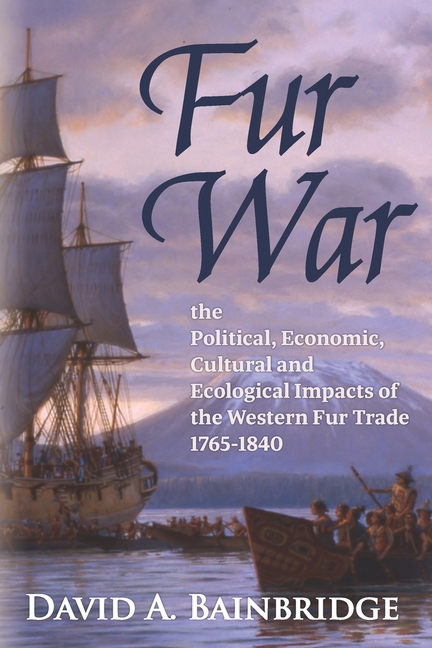
Fur War: The Political, Economic, Cultural and Ecological Impacts of the Western Fur Trade 1765-1840 - Paperback
$11.99
$12.99
-8%Quantity
01
Pay over time for orders over $35.00 with
Offers & Perks
Earn 11 points with this purchase
Added to your rewards balance after checkout.
100 points welcome bonus
Create an account and start with extra points.
Availability:In StockContributor:David A. BainbridgeTheme:Ethnic Orientation/Native AmericanPublish date:8/31/2020Pages:204
Languages:EnglishPublisher:Rio Redondo PressISBN-13:9781735149226ISBN-10:1735149225UPC:9781735149226Book Category:HistoryBook Subcategory:IndigenousSize:9.00 x 6.00 x 0.43 inchesWeight:0.281Product ID:SCBARNC483
The animal fur trade played a key role in the development and ultimate ownership of lands and resources on the West Coast of North America. Yet it is often neglected in histories and understanding of the west. In California classrooms it is skipped almost entirely.The players in this complex conflict included Russia, Great Britain, America, France, Spain, Mexico, Hawaii, and the many First Nations whose lands it had been. At times the fur trade was incredibly profitable and helped make some men and women very rich. The economic returns and taxes also helped support governments.More often, the fur trade led to suffering, abuse, death, and despair for the sailors, trappers, and fur traders involved. The most profitable period was very short; but the lasting impacts have been severe for the First Nations whose lands were invaded and for the ecosystems that were stripped of sea otter beaver.Abuse and conflicts led to resistance and warfare that in some cases decimated local communities. Massacres took place, but more often it was not deliberate. The natives were needed to collect furs, but they had little or no resistance to introduced diseases. Beginning at first contact with explorers, a series of epidemics of smallpox, malaria, influenza, syphilis and other diseases swept through the region. A times these killed 50-90% of the people in tribal groups and visitors found only skulls and bones. The intermittent fever of the 1830s was accidently spread by the Hudson's Bay Company trappers. It was particularly destructive in Oregon and California. The death of so many native people led to social disruption in even the strongest tribal groups. Many tribes and tribelets were gone before they were noted in a journal or placed on a map. But some survived and they have recovered in population and spirit. Efforts are being made to save, recover, and use native languages.The impacts from the fur trade are still seen today along the coast and rivers of Alaska, Canada and the American west. Many groups and institutions are working to restore these ecosystems, and everyone can play a part.
Languages:EnglishPublisher:Rio Redondo PressISBN-13:9781735149226ISBN-10:1735149225UPC:9781735149226Book Category:HistoryBook Subcategory:IndigenousSize:9.00 x 6.00 x 0.43 inchesWeight:0.281Product ID:SCBARNC483
Free shipping on orders over $75. Standard shipping takes 3-7 business days. Returns accepted within 30 days of purchase.