
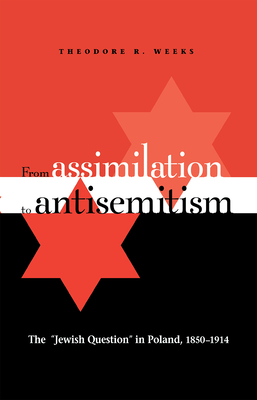
From Assimilation to Antisemitism: The Jewish Question in Poland, 1850-1914 - Hardcover
Pay over time for orders over $35.00 with
Offers & Perks
Earn 59 points with this purchase
Added to your rewards balance after checkout.
100 points welcome bonus
Create an account and start with extra points.
Before the mid-nineteenth century, Jews in the Polish lands led lives quite separate from their Christian neighbors. As modern ideologies of nationalism gained strength, however, Jewish separateness came to be seen as a problem, even a threat, to the Polish nation. Assimilation, a process by which Jews would become Poles in all but their religious practices, was the solution most often presented by liberal Poles from the late eighteenth century--when the "Jewish question" was first seriously debated in Polish society--until the late nineteenth century. This solution foresaw the cultural, linguistic, and external differences between Catholic Poles and Jews diminishing, thereby allowing Polish-speaking, European-clad Jews to take their appropriate place within the Polish nation.
As Russian cultural and linguistic domination threatened both Polish society and Jews, assimilation was also seen as a means of strengthening the Polish nation. Unfortunately, however, closer relations between Poles and Jews led to increased frictions and even strife between them. In the final decades of the nineteenth century, the solution of assimilation was called into question more and more both by Polish antisemites and by Jewish nationalists. By 1914 the gap between "Polish" and "Jewish" had become so great that many declared it impossible to simultaneously be a "good Jew" and a "good Pole."
Weeks examines how the ideal of assimilation was gradually replaced by more exclusionary and aggressive ideologies, culminating in the early twentieth century in widespread Polish antisemitism. He argues that several long-term factors--economic change, political and cultural repression, the general intensification of national consciousness at the time, and the Revolution of 1905--played a part in the deterioration of Polish-Jewish relations. As the hope for Polish cultural and political autonomy dwindled, Jews became an easy target for Poles.
Theodore R. Weeks is Associate Professor of History at Southern Illinois University at Carbondale and is the author of Nation and State in Late Imperial Russia.
Contributor(s)
Author
Free shipping on orders over $75. Standard shipping takes 3-7 business days. Returns accepted within 30 days of purchase.