
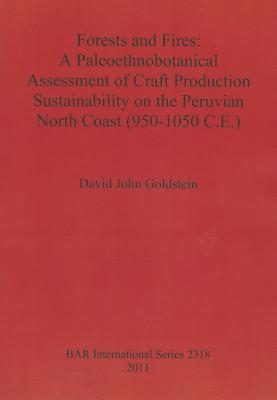
Forests and Fires: A Paleoethnobotanical Assessment of Craft Production Sustainability on the Peruvian North Coast (950-1050 C.E.) - Paperback
Pay over time for orders over $35.00 with
Offers & Perks
Earn 23 points with this purchase
Added to your rewards balance after checkout.
100 points welcome bonus
Create an account and start with extra points.
During the Middle Sicán period (C.E. 950-1050) on the North Coast of Peru, artisans developed a sophisticated tradition of ceramic and metalworking production amidst dry coastal forests of the region. Organic fuel resources, specifically wood, clearly played a vital role in the manufacture of these objects; however, this component of production has been largely overlooked. Thus, a major gap in our understanding of the relationship between Sicán period production and the local landscape has developed. The Sicán Archaeological Project (SAP) suggests that the production of metal and ceramics during this period likely placed the local fuel resources under considerable stress. Yet, an evaluation of the archaeological data is essential to assess the degree of overexploitation, identifying the fuels used, their contexts for use, and their role in local ecology. This study interprets how Middle Sicán artisans met their fuel-wood requirements for production in light of easily endangered forest resources. An examination of the archaeological charcoal from Middle Sicán period kilns, hearths, and metal furnaces permits the reconstruction of fuel use and the ecological setting of production. This unique site demonstrates the concurrent production of metal and ceramics, as well as the presence of domestic activity. Using wood anatomy of fuels recovered from archaeological features, the author identified the fuel materials of different use contexts.
Contributor(s)
Author
Free shipping on orders over $75. Standard shipping takes 3-7 business days. Eligible items may be returned within 30 days of delivery. Conditions apply.