
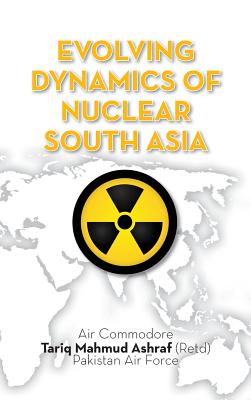
Evolving Dynamics of Nuclear South Asia - Hardcover
$68.99
$74.50
-7%Quantity
01
Pay over time for orders over $35.00 with
Offers & Perks
Earn 68 points with this purchase
Added to your rewards balance after checkout.
100 points welcome bonus
Create an account and start with extra points.
Availability:In StockContributor:Tariq Mahmud AshrafTheme:Chronological Period/1950-1999, Chronological Period/21st Century, Cultural Region/Asian, Cultural Region/IndianPublish date:3/15/2014Pages:390
Languages:EnglishPublisher:K W Publishers Pvt Ltd.ISBN-13:9789383649105ISBN-10:9383649100UPC:9789383649105Book Category:Political Science, HistoryBook Subcategory:World, Security (National & International), MilitaryBook Topic:Asian, Nuclear WarfareSize:9.00 x 6.00 x 1.00 inchesWeight:0.74Product ID:SCAKPBRESV
India and Pakistan have both never really accepted each other's existence. Their ties have been characterised by a lingering hostility and a pronounced qualitative and quantitative military imbalance in favour of India. Additionally, India took the lead in developing nuclear weapons while Pakistan only seriously embarked on this endeavour after India had already conducted its "peaceful nuclear explosion" in 1974. Having lost half of their country in 1971, and realising that they could never really hope to match India in conventional military might, Pakistan embarked on nuclear weapons development in the early 1970s more as a necessity rather than as a need. Despite adopting the more difficult route of uranium enrichment, Pakistan proved virtually unstoppable. While China provided some assistance to Pakistan, the United States maintained a marked ambivalence towards her quest for nuclear weapons - it sometimes applied sanctions against Pakistan while at other times, it opted to ignore what was happening by turning a blind eye. The weaponisation of their nuclear capability in 1998 led India and Pakistan to venture into the realm of doctrinal rethinking. Commencing with a revision of the conventional military doctrines, this led to India publishing its draft nuclear doctrine whereas Pakistan preferred ambiguity. The essential consideration herein was on how the conventional military thinking of both the countries has been influenced by the availability of nuclear weapons in their respective inventories. Along with this process of doctrinal evolution, both countries were required to establish viable and internationally acceptable nuclear weapon control systems. The doctrinal evolution was responsible for inducing several systemic changes in their armed forces, and their entire military system had to undergo significant changes. Simultaneously, these led to a fresh assessment of the comparative nuclear military potential of the two countries and how this could possibly be employed in a future conflict.
Languages:EnglishPublisher:K W Publishers Pvt Ltd.ISBN-13:9789383649105ISBN-10:9383649100UPC:9789383649105Book Category:Political Science, HistoryBook Subcategory:World, Security (National & International), MilitaryBook Topic:Asian, Nuclear WarfareSize:9.00 x 6.00 x 1.00 inchesWeight:0.74Product ID:SCAKPBRESV
Free shipping on orders over $75. Standard shipping takes 3-7 business days. Eligible items may be returned within 30 days of delivery. Conditions apply.