
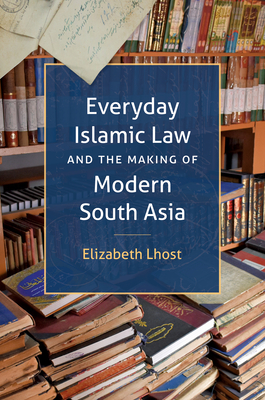
Everyday Islamic Law and the Making of Modern South Asia - Hardcover
$108.99
Quantity
01
Pay over time for orders over $35.00 with
Offers & Perks
Earn 108 points with this purchase
Added to your rewards balance after checkout.
100 points welcome bonus
Create an account and start with extra points.
Availability:In StockContributor:Elizabeth LhostSeries:Islamic Civilization and Muslim NetworksTheme:Cultural Region/Asian, Cultural Region/Indian, Religious Orientation/IslamicPublish date:7/12/2022Pages:376
Languages:EnglishPublisher:University of North Carolina PressISBN-13:9781469668116ISBN-10:1469668114UPC:9781469668116Book Category:History, Law, ReligionBook Subcategory:Asia, Islamic, IslamBook Topic:South, HistorySize:9.21 x 6.14 x 1.00 inchesWeight:0.758Product ID:SC0YPDXQX5
Beginning in the late eighteenth century, British rule transformed the relationship between law, society, and the state in South Asia. But qazis and muftis, alongside ordinary people without formal training in law, fought back as the colonial system in India sidelined Islamic legal experts. They petitioned the East India Company for employment, lobbied imperial legislators for recognition, and built robust institutions to serve their communities. By bringing legal debates into the public sphere, they resisted the colonial state's authority over personal law and rejected legal codification by embracing flexibility and possibility. With postcards, letters, and telegrams, they made everyday Islamic law vibrant and resilient and challenged the hegemony of the Anglo-Indian legal system.
Following these developments from the beginning of the Raj through independence, Elizabeth Lhost rejects narratives of stagnation and decline to show how an unexpected coterie of scholars, practitioners, and ordinary individuals negotiated the contests and challenges of colonial legal change. The rich archive of unpublished fatwa files, qazi notebooks, and legal documents they left behind chronicles their efforts to make Islamic law relevant for everyday life, even beyond colonial courtrooms and the confines of family law. Lhost shows how ordinary Muslims shaped colonial legal life and how their diversity and difference have contributed to contemporary debates about religion, law, pluralism, and democracy in South Asia and beyond.
Following these developments from the beginning of the Raj through independence, Elizabeth Lhost rejects narratives of stagnation and decline to show how an unexpected coterie of scholars, practitioners, and ordinary individuals negotiated the contests and challenges of colonial legal change. The rich archive of unpublished fatwa files, qazi notebooks, and legal documents they left behind chronicles their efforts to make Islamic law relevant for everyday life, even beyond colonial courtrooms and the confines of family law. Lhost shows how ordinary Muslims shaped colonial legal life and how their diversity and difference have contributed to contemporary debates about religion, law, pluralism, and democracy in South Asia and beyond.
Languages:EnglishPublisher:University of North Carolina PressISBN-13:9781469668116ISBN-10:1469668114UPC:9781469668116Book Category:History, Law, ReligionBook Subcategory:Asia, Islamic, IslamBook Topic:South, HistorySize:9.21 x 6.14 x 1.00 inchesWeight:0.758Product ID:SC0YPDXQX5
Lhost, Elizabeth: - Elizabeth Lhost is lecturer in history and postdoctoral fellow at Dartmouth College.
Publisher: University of North Carolina Press
Contributor(s)
Author
Free shipping on orders over $75. Standard shipping takes 3-7 business days. Eligible items may be returned within 30 days of delivery. Conditions apply.