
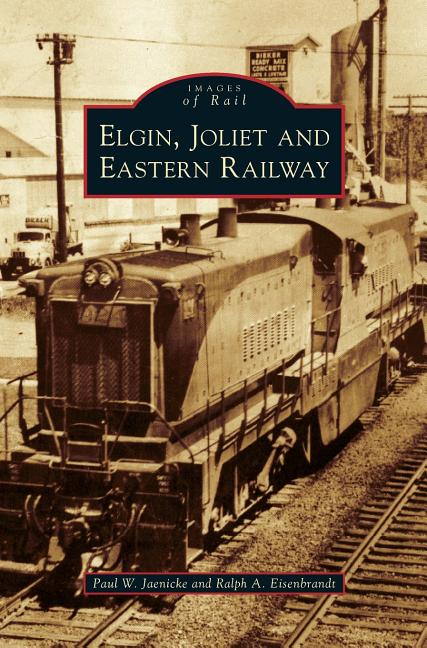
Elgin, Joliet and Eastern Railway - Hardcover
$23.99
$31.99
-25%Quantity
01
Pay over time for orders over $35.00 with
Offers & Perks
Earn 23 points with this purchase
Added to your rewards balance after checkout.
100 points welcome bonus
Create an account and start with extra points.
Availability:In StockContributor:Paul W. Jaenicke, Ralph A. EisenbrandtTheme:Cultural Region/Midwest, Cultural Region/Upper Midwest, Geographic Orientation/Illinois, Locality/Chicago, IllinoisPublish date:7/4/2007Pages:130
Languages:EnglishPublisher:Arcadia Publishing Library EditionsISBN-13:9781531631543ISBN-10:1531631541UPC:9781531631543Book Category:Transportation, HistoryBook Subcategory:Railroads, United StatesBook Topic:History, State & LocalSize:9.61 x 6.69 x 0.38 inchesWeight:0.413Product ID:SCNS2RE3Z5
In 1884, the Joliet, Aurora and Northern Railroad was formed to connect the growing industrial cities of Joliet and Aurora. This system evolved into the
Elgin, Joliet and Eastern Railway. By 1893, it encircled Chicago from Waukegan, via Joliet, to Porter, Indiana. The railroad developed into a prosperous subsidiary of U.S. Steel at the beginning of the 20th century. It primarily served the steel
mills and facilities of its parent company and as a bridge route between the many Chicago railroads it crossed. It has also been an industry innovator. It was one of the first Class 1 railroads to completely convert to diesel locomotive power in 1949 and the first in the world to install an automatic, electrically operated car retarder yard in 1952. Today it is the same prosperous railroad it was over 120 years ago, serving the rail transportation needs of its online customers and as an even more important bridge route for the region's railroads.
Elgin, Joliet and Eastern Railway. By 1893, it encircled Chicago from Waukegan, via Joliet, to Porter, Indiana. The railroad developed into a prosperous subsidiary of U.S. Steel at the beginning of the 20th century. It primarily served the steel
mills and facilities of its parent company and as a bridge route between the many Chicago railroads it crossed. It has also been an industry innovator. It was one of the first Class 1 railroads to completely convert to diesel locomotive power in 1949 and the first in the world to install an automatic, electrically operated car retarder yard in 1952. Today it is the same prosperous railroad it was over 120 years ago, serving the rail transportation needs of its online customers and as an even more important bridge route for the region's railroads.
Languages:EnglishPublisher:Arcadia Publishing Library EditionsISBN-13:9781531631543ISBN-10:1531631541UPC:9781531631543Book Category:Transportation, HistoryBook Subcategory:Railroads, United StatesBook Topic:History, State & LocalSize:9.61 x 6.69 x 0.38 inchesWeight:0.413Product ID:SCNS2RE3Z5
Publisher: Arcadia Publishing Library Editions
Contributor(s)
Authors
Free shipping on orders over $75. Standard shipping takes 3-7 business days. Returns accepted within 30 days of purchase.