
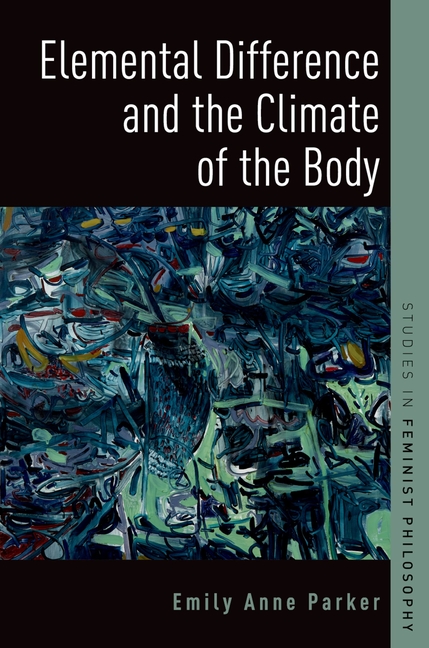
Elemental Difference and the Climate of the Body - Paperback
$47.99
Quantity
01
Pay over time for orders over $35.00 with
Offers & Perks
Earn 47 points with this purchase
Added to your rewards balance after checkout.
100 points welcome bonus
Create an account and start with extra points.
Availability:In StockContributor:Emily Anne ParkerSeries:Studies in Feminist PhilosophyPublish date:7/1/2021Pages:320
Languages:EnglishPublisher:Oxford University PressISBN-13:9780197575086ISBN-10:0197575080UPC:9780197575086Book Category:Social Science, PhilosophyBook Subcategory:Feminism & Feminist Theory, Political, Gender StudiesSize:9.20 x 6.20 x 0.80 inchesWeight:0.477Product ID:SC3AKM5Y9X
In nineteenth-century Europe, differences among human bodies were understood to be matters of scientific classification. At the height of scientific acceptance, it was unthinkable that race or sex or diagnosis or indigence were invention. Today, however, differences among human bodies are understood as matters of social construction. The philosophy of social construction understands differences among humans to be matters of human imposition. Social constructionism's way of understanding the origin of differences among humans is so well-established as to have no currently viable alternatives, even among new materialists, social constructionism's most ardent critics. This book argues that new materialists and social constructionists share a distinction between the political and the ecological. Emily Anne Parker centers her argument on the philosophical concept of the polis, according to which there is one complete human form. It is this form that is to blame for our current political and ecological crisis. Political hierarchies and ecological crises are often considered to be two different problems: for example, many speak of parallel problems, climate change and racial injustice. Parker argues that these are not parallel crises so much as one problem: the polis. The philosophy of the polis asserts that there is one complete human body, and that body is meant to govern all other things. In that sense there are not two crises, but instead one concern: to perceive the ways in which this tradition of the polis constrains the present. Elemental difference in the polis is appreciated in the fact that "empirical bodily non-identity," an Aristotelian concept, can be called upon to elevate one group of bodies among the rest. Parker builds from Sylvia Wynter, who argues that the very idea of empirical bodily non-identity begins with the modern science of racial anatomy, or what Wynter calls biocentrism. Parker argues that biocentrism is a feature of the polis, according to which the one complete body was defined by its capacity for disembodied thought. The sciences of racial anatomy are a more explicit commitment to biocentrism, but the ranking of matter with respect to one complete human, a body that is the site of supra-natural thinking, is a practice that has always characterized the polis. In this way, the polis is responsible for both political and ecological hierarchy. It is as responsible for what is euphemistically called climate change as it is for the political hierarchy that constitutes it. Elemental Difference and the Climate of the Body ultimately bridges the insights of social constructionism and new materialisms to create a philosophy of elemental difference. Difference, rather than needing to be either dismissed based on its social construction or reified in keeping with the hierarchies of the polis, is crucial for addressing contemporary crises of the polis.
Languages:EnglishPublisher:Oxford University PressISBN-13:9780197575086ISBN-10:0197575080UPC:9780197575086Book Category:Social Science, PhilosophyBook Subcategory:Feminism & Feminist Theory, Political, Gender StudiesSize:9.20 x 6.20 x 0.80 inchesWeight:0.477Product ID:SC3AKM5Y9X
Emily Anne Parker is Associate Professor of Philosophy at Towson University and editor of Differences: Rereading Beauvoir and Irigaray (2017), also published by Oxford University Press.
Publisher: Oxford University Press
Contributor(s)
Author
Free shipping on orders over $75. Standard shipping takes 3-7 business days. Eligible items may be returned within 30 days of delivery. Conditions apply.