
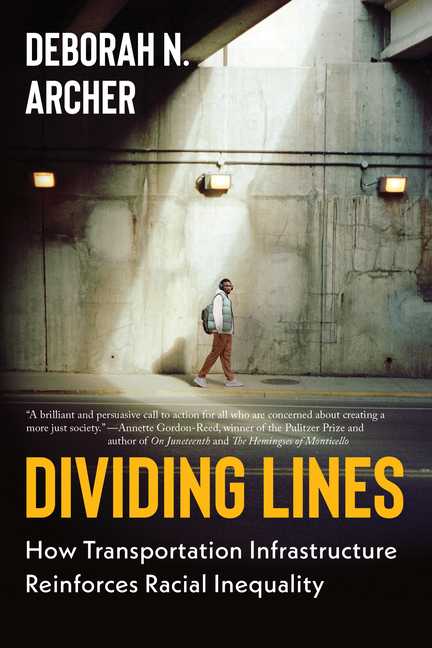
Dividing Lines: How Transportation Infrastructure Reinforces Racial Inequality - Paperback
Choose Option

Pay over time for orders over $35.00 with
Offers & Perks
Earn 13 points with this purchase
Added to your rewards balance after checkout.
100 points welcome bonus
Create an account and start with extra points.
Our nation's transportation system is crumbling: highways are collapsing, roads are pockmarked, and commuter trains are unreliable. But as acclaimed scholar and ACLU president Deborah Archer warns in Dividing Lines, before we can think about rebuilding and repairing, we must consider the role race has played in transportation infrastructure, from the early twentieth century and into the present day.
As Archer demonstrates, the success of the Civil Rights movement and the fall of Jim Crow in the 1960s did not mean the end of segregation. The status quo would not be so easily dismantled. With state-sanctioned racism no longer legal, officials across the country--not just in the South--turned to transportation infrastructure to keep Americans divided. A wealthy white neighborhood could no longer be "protected" by racial covenants and segregated shops, but a multilane road, with no pedestrian crossings, could be built along its border to make it difficult for people from a lower-income community to visit. Highways could not be routed through Black neighborhoods based on the race of their residents, but those neighborhoods' lower property values--a legacy of racial exclusion--could justify their destruction. A new suburb could not be for "whites only," but planners could refuse to extend sidewalks from Black communities into white ones.
Drawing on a wealth of sources, including interviews with people who now live in the shadow of highways and other major infrastructure projects, Archer presents a sweeping, national account--from Atlanta and Houston to Indianapolis and New York City--of our persistent divisions. With immense authority, she examines the limits of current Civil Rights laws, which can be used against overtly racist officials but are less effective in addressing deeper, more enduring, structural challenges. But Archer remains hopeful, and in the final count describes what a just system would look like and how we can achieve it.
Contributor(s)
Author
Free shipping on orders over $75. Standard shipping takes 3-7 business days. Returns accepted within 30 days of purchase.