
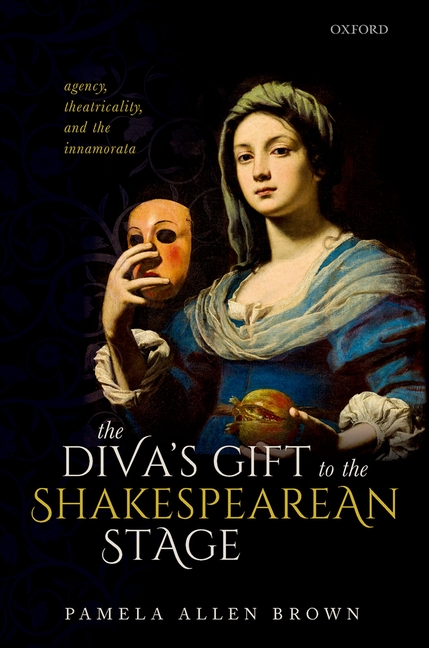
The Diva's Gift to the Shakespearean Stage: Agency, Theatricality, and the Innamorata - Hardcover
$120.99
Quantity
01
Pay over time for orders over $35.00 with
Offers & Perks
Earn 120 points with this purchase
Added to your rewards balance after checkout.
100 points welcome bonus
Create an account and start with extra points.
Availability:In StockContributor:Pamela Allen BrownTheme:Chronological Period/ModernPublish date:2/25/2022Pages:308
Languages:EnglishPublisher:Oxford University PressISBN-13:9780198867838ISBN-10:0198867832UPC:9780198867838Book Category:Literary CriticismBook Subcategory:Shakespeare, Modern, DramaSize:9.10 x 6.20 x 1.00 inchesWeight:0.636Product ID:SCM7A2JZ96
The Diva's Gift traces the far-reaching impact of the first female stars on the playwrights and players of the all-male stage. When Shakespeare entered the scene, women had been acting in Italian troupes for two decades, traveling in Italy and beyond and performing in all genres, including tragedy. The ambitious actress reinvented the innamorata, making her more charismatic and autonomous, thrilling audiences with her skills. Despite fervent attacks, some actresses became the first international stars, winning royal and noble patrons and literary admirers in France and Spain. After Elizabeth and her court caught wind of their success in Paris, Italian troupes with actresses crossed the Channel to perform. The Italians' repeat visits and growing fame posed a radical challenge to English professionals just as they were building their first paying theaters. Some writers treated the actress as a whorish threat to their stage, which had long minimized female roles. Others saw a vital new model full of promise. Lyly, Marlowe, and Kyd endowed innamorata parts with hot-blooded, racialized passions, but made them self-aware agents, not counters traded between men. Shakespeare, Jonson, Webster and others followed, ringing changes on the new type in comedy, tragedy, and romance. Like the comici they recycled actress-linked theatergrams and star scenes, such as cross-dressing, the mad scene, and the sung lament. In this way, the diva's prodigious virtuosity and stardom altered the horizons of playmaking even on the womanless stage. Capitalizing on the talents of boy players, the best playwrights created bold new roles endowed with her alien glamour, such as Lyly's Sapho and Pandora, Marlowe's Dido, Kyd's Bel-Imperia, Webster's Vittoria, and Shakespeare's Beatrice, Viola, Portia, Juliet, and Ophelia. Cleopatra is not alone in her superb theatricality and dazzling strangeness. As this book demonstrates, the diva's gifts mark them all.
Languages:EnglishPublisher:Oxford University PressISBN-13:9780198867838ISBN-10:0198867832UPC:9780198867838Book Category:Literary CriticismBook Subcategory:Shakespeare, Modern, DramaSize:9.10 x 6.20 x 1.00 inchesWeight:0.636Product ID:SCM7A2JZ96
Pamela Allen Brown, Professor of English, University of Connecticut Pamela Allen Brown, Professor of English at the University of Connecticut, has published widely on female playing and jesting in early modern England. In this work, she uses a transnational lens to show how the English stage benefited from the innovations of actresses in the commedia dell'arte, the first professional companies to tour foreign cities, including London. Professor Brown's books include Better a Shrew than a Sheep: Women, Drama and the Culture of Jest in Early Modern England, As You Like It: Texts and Contexts (with Jean E. Howard), and Women Players in Early Modern England: Beyond the All-Male Stage (with Peter Parolin). A founding member of Theater Without Borders, she has also translated stage dialogues by the diva Isabella Andreini in The Lovers' Debates for the Stage: A Bilingual Edition (with Eric Nicholson and Julie Campbell).
Publisher: Oxford University Press
Contributor(s)
Author
Free shipping on orders over $75. Standard shipping takes 3-7 business days. Eligible items may be returned within 30 days of delivery. Conditions apply.