
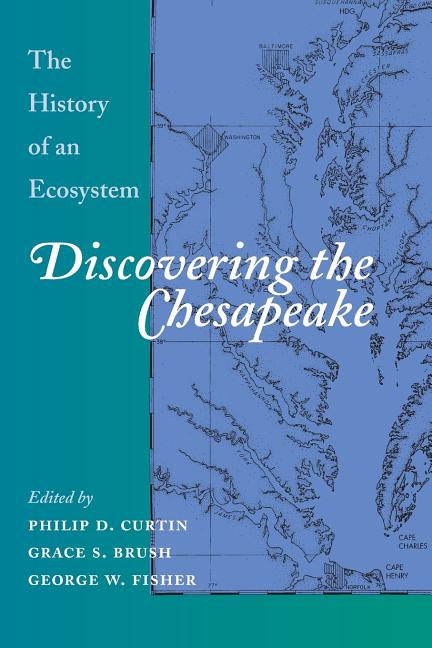
Discovering the Chesapeake: The History of an Ecosystem - Paperback
Pay over time for orders over $35.00 with
Offers & Perks
Earn 44 points with this purchase
Added to your rewards balance after checkout.
100 points welcome bonus
Create an account and start with extra points.
With its rich evolutionary record of natural systems and long history of human activity, the Chesapeake Bay provides an excellent example of how a great estuary has responded to the powerful forces of human settlement and environmental change. Discovering the Chesapeake explores all of the long-term changes the Chesapeake has undergone and uncovers the inextricable connections among land, water, and humans in this unusually delicate ecosystem.
Edited by a historian, a paleobiologist, and a geologist at the Johns Hopkins University and written for general readers, the book brings together experts in various disciplines to consider the truly complex and interesting environmental history of the Chesapeake and its watershed. Chapters explore a variety of topics, including the natural systems of the watershed and their origins; the effects of human interventions ranging from Indian slash-and-burn practices to changing farming techniques; the introduction of pathogens, both human and botanical; the consequences of the oyster's depletion; the response of bird and animal life to environmental factors introduced by humans; and the influence of the land and water on the people who settled along the Bay.
Discovering the Chesapeake, originating in two conferences sponsored by the National Science Foundation, achieves a broad historical and scientific appreciation of the various processes that shaped the Chesapeake region.
"Today's Chesapeake Bay is only some ten thousand years old. What a different world it was . . . when the region was the home of the ground sloth, giant beaver, dire wolf, mastodon, and other megafauna. In the next few thousand years, the ice may form again and the Bay will once more be the valley of the Susquehanna, unless, of course, human-induced changes in climate create some other currently unpredictable condition."--from the Introduction
Philip D. Curtin is a professor emeritus in the Department of History, Grace S. Brush is a professor in the Department of Geography and Environmental Engineering, and George W. Fisher is a professor in the Department of Earth and Planetary Sciences at Johns Hopkins University.
Contributor(s)
Free shipping on orders over $75. Standard shipping takes 3-7 business days. Eligible items may be returned within 30 days of delivery. Conditions apply.