
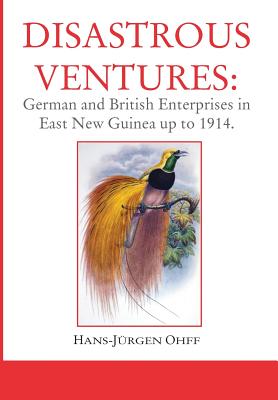
Disastrous Ventures: German and British Enterprises in East New Guinea up to 1914 - Hardcover
Pay over time for orders over $35.00 with
Offers & Perks
Earn 79 points with this purchase
Added to your rewards balance after checkout.
100 points welcome bonus
Create an account and start with extra points.
The colonies of German New Guinea (GNG) and British New Guinea (BNG) which from 1906 became the Territory of Papua, experienced different paths of development due to the colonial administrators' divergent commercial policies. The establishment of these colonies in the late19th century, and all of the major events and decisions relating to them up to 1914, were based mainly on commercial imperatives. This book examines the circumstances leading to the founding of GNG and BNG. It analyses the impact of government decisions and the growth of capitalist enterprises in East New Guinea during its first 30 years (1884-1914).
German and British governments were reluctant to become involved in the colonisation of East New Guinea. In the context of the political pressures prevailing in Berlin and London, both governments succumbed but insisted that the cost of administering and developing the colonies was not to be borne by the state. The establishment costs of GNG were accepted by the Neu Guinea Compagnie (NGC) until 1899. It was a haphazard and arbitrary undertaking which was expensive and costly in human life. When the German government assumed administrative and financial control in 1899, the development of GNG had generally progressed in line with Chancellor Otto von Bismarck's view that Germany's colonies should be treated as economic enterprises. This was despite the bureaucratic form of government NGC had established.
In contrast, there were claims that BNG was to be established to meet defence objectives, and to protect the Papuan population from non-British influences. This posturing by the Australian colonies hid their true objective of seeking to gain control over the entire eastern sector of New Guinea and adjacent islands. The Queensland sugar planters sought to procure cheap labour, and Queensland, New South Wales and Victoria were all opposed to the establishment of competitive agricultural industries. After Britain acquired southeast New Guinea and the recruitment of Papuan and Melanesian labour into Australia had been outlawed, BNG was left to the gold prospectors, with no meaningful plantation industry taking place until the Australian federal government assumed administrative control over the Territory in 1906.
Neither colony had any military significance. Both colonies shared a common European moral outlook in their administrations. By 1914 GNG had become a commercially viable enterprise, but BNG, now Papua, had failed to take advantage of the 1902-1912 boom in tropical agriculture. Given their comparable size and geography, the economic performance of the two colonies should have been similar. That this did not occur is beyond dispute, and the difference in commercial outcomes is explained by the divergent policy positions taken by the two administrations.
Free shipping on orders over $75. Standard shipping takes 3-7 business days. Eligible items may be returned within 30 days of delivery. Conditions apply.