
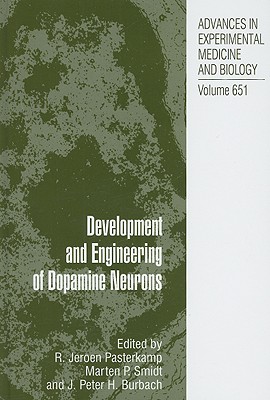
Development and Engineering of Dopamine Neurons - Hardcover
Pay over time for orders over $35.00 with
Offers & Perks
Earn 168 points with this purchase
Added to your rewards balance after checkout.
100 points welcome bonus
Create an account and start with extra points.
R. Jeroen Pasterkamp is an Assistant Professor at the Rudolf Magnus
Institute of Neuroscience, Department of Neuroscience and Pharmacology, University
Medical Center Utrecht, Utrecht, The Netherlands. The focus of his laboratory is
directed towards understanding the molecular and intracellular signaling events
involved in the formation of neuronal connections with a particular focus on the
developing dopamine system. His research team concentrates on the developing
mouse embryo using an integrated approach involving molecular biology, cell biology,
in vivo functional proteomics, and mouse genetics. He received his PhD from
the Netherlands Institute for Neurosciences (Amsterdam, The Netherlands) and
did his Postdoctoral at the Department of Neuroscience, Johns Hopkins University
School of Medicine, Baltimore, USA.
Marten Smidt is an Associate Professor at the Rudolf Magnus Institute
of Neuroscience, Department of Neuroscience and Pharmacology, University
Medical Center Utrecht, Utrecht, The Netherlands. The focus of his laboratory is
directed towards understanding the developmental processes that underlie neuronal
differentiation and specification. The main focus has been the development of
mesodiencephalic dopamine neurons. The work includes mouse genetics, molecular
genetics and molecular biology. Marten Smidt received his PhD from the University
of Groningen (Groningen, The Netherlands) and did his postdoctoral at Utrecht
University, Department of Medical Pharmacology, Rudolf Magnus Institute of
Neuroscience (Utrecht, The Netherlands).
J. Peter H. Burbach is professor of Molecular Neuroscience at Utrecht
University and head of the Department of Neuroscience and Pharmacology, Rudolf
Magnus Institute of Neuroscience, University Medical Center Utrecht, Utrecht, The
Netherlands. His research interests concern the role of transcriptionfactors in development and regulation of peptidergic and dopaminergic neurons, and the molecular
mechanisms of human neurodevelopmental disorders. He received his PhD from
Utrecht University and did postdoctoral work at the Clinical Research Institute of
Montreal, Canada. He obtained professorships in Molecular Biology and Molecular
Neuroendocrinology. Since 2001 he is a Summer scientist at the Marine Biological
Laboratory, Woods Hole, MA, USA.
Edition
2009 Edition
Contributor(s)
Free shipping on orders over $75. Standard shipping takes 3-7 business days. Eligible items may be returned within 30 days of delivery. Conditions apply.