Surprise Castle
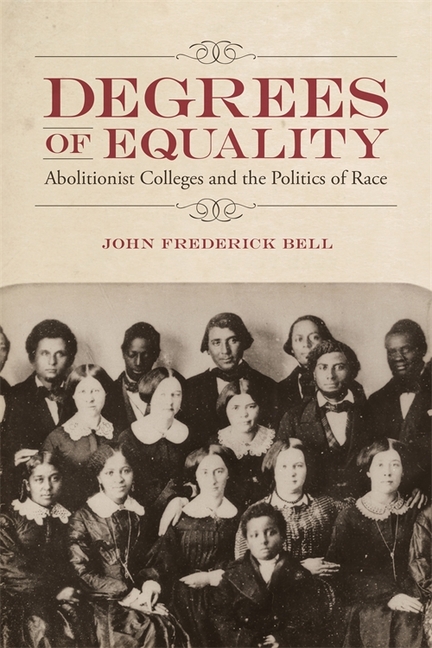
Degrees of Equality: Abolitionist Colleges and the Politics of Race

Degrees of Equality: Abolitionist Colleges and the Politics of Race - Hardcover

$49.99
$50.00
Quantity
01

Pay over time for orders over $35.00 with

Offers & Perks

Earn 49 points with this purchase

Added to your rewards balance after checkout.

100 points welcome bonus

Create an account and start with extra points.

Join now
Availability:In StockContributor:John Frederick BellSeries:Antislavery, Abolition, and the Atlantic WorldTheme:Chronological Period/19th CenturyPublish date:5/11/2022Pages:312
Languages:EnglishPublisher:LSU PressISBN-13:9780807171943ISBN-10:0807171948UPC:9780807171943Book Category:Education, Social Science, HistoryBook Subcategory:History, Enslavement, United StatesBook Topic:19th CenturySize:9.00 x 6.00 x 0.81 inchesWeight:0.627Product ID:SCNE4VW94M

Winner of the New Scholar's Book Award from the American Educational Research Association
Winner of the Linda Eisenmann Prize from the History of Education Society

The abolitionist movement not only helped bring an end to slavery in the United States but also inspired the large-scale admission of African Americans to the country's colleges and universities. Oberlin College changed the face of American higher education in 1835 when it began enrolling students irrespective of race and sex. Camaraderie among races flourished at the Ohio institution and at two other leading abolitionist colleges, Berea in Kentucky and New York Central, where Black and white students allied in the fight for emancipation and civil rights. After Reconstruction, however, color lines emerged on even the most progressive campuses. For new generations of white students and faculty, ideas of fairness toward African Americans rarely extended beyond tolerating their presence in the classroom, and overt acts of racial discrimination grew increasingly common by the 1880s.

John Frederick Bell's Degrees of Equality analyzes the trajectory of interracial reform at Oberlin, New York Central, and Berea, noting its implications for the progress of racial justice in both the nineteenth and twenty-first centuries. Drawing on student and alumni writings, institutional records, and promotional materials, Bell interrogates how abolitionists and their successors put their principles into practice. The ultimate failure of these social experiments illustrates a tragic irony of abolitionism, as the achievement of African American freedom and citizenship led whites to divest from the project of racial pluralism.

Languages:EnglishPublisher:LSU PressISBN-13:9780807171943ISBN-10:0807171948UPC:9780807171943Book Category:Education, Social Science, HistoryBook Subcategory:History, Enslavement, United StatesBook Topic:19th CenturySize:9.00 x 6.00 x 0.81 inchesWeight:0.627Product ID:SCNE4VW94M

John Frederick Bell is assistant professor of history at Assumption University in Worcester, Massachusetts.


Publisher: LSU Press

Free shipping on orders over $75. Standard shipping takes 3-7 business days. Eligible items may be returned within 30 days of delivery. Conditions apply.