
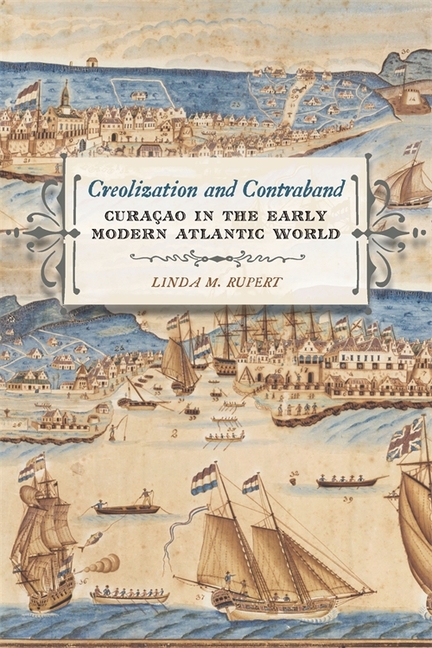
Creolization and Contraband: Curaçao in the Early Modern Atlantic World - Paperback
Pay over time for orders over $35.00 with
Offers & Perks
Earn 36 points with this purchase
Added to your rewards balance after checkout.
100 points welcome bonus
Create an account and start with extra points.
When Curaçao came under Dutch control in 1634, the small island off South America's northern coast was isolated and sleepy. The introduction of increased trade (both legal and illegal) led to a dramatic transformation, and Curaçao emerged as a major hub within Caribbean and wider Atlantic networks. It would also become the commercial and administrative seat of the Dutch West India Company in the Americas.
The island's main city, Willemstad, had a non-Dutch majority composed largely of free blacks, urban slaves, and Sephardic Jews, who communicated across ethnic divisions in a new creole language called Papiamentu. For Linda M. Rupert, the emergence of this creole language was one of the two defining phenomena that gave shape to early modern Curaçao. The other was smuggling. Both developments, she argues, were informal adaptations to life in a place that was at once polyglot and regimented. They were the sort of improvisations that occurred wherever expanding European empires thrust different peoples together. Creolization and Contraband uses the history of Curaçao to develop the first book-length analysis of the relationship between illicit interimperial trade and processes of social, cultural, and linguistic exchange in the early modern world. Rupert argues that by breaking through multiple barriers, smuggling opened particularly rich opportunities for cross-cultural and interethnic interaction. Far from marginal, these extra-official exchanges were the very building blocks of colonial society.Contributor(s)
Author
Free shipping on orders over $75. Standard shipping takes 3-7 business days. Eligible items may be returned within 30 days of delivery. Conditions apply.