
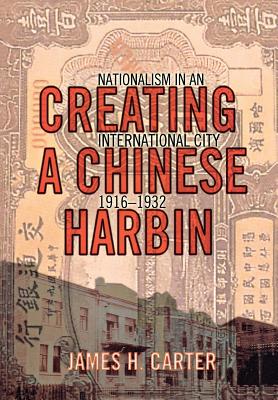
Creating a Chinese Harbin - Hardcover
Pay over time for orders over $35.00 with
Offers & Perks
Earn 81 points with this purchase
Added to your rewards balance after checkout.
100 points welcome bonus
Create an account and start with extra points.
James H. Carter outlines the birth of Chinese nationalism in an unlikely setting: the international city of Harbin. Planned and built by Russian railway engineers, the city rose quickly from the Manchurian plain, changing from a small fishing village to a modern city in less than a generation. Russian, Chinese, Korean, Polish, Jewish, French, and British residents filled this multiethnic city on the Sungari River. The Chinese took over Harbin after the October Revolution and ruled it from 1918 until the Japanese founded the puppet state of Manchukuo in 1932. In his account of the radical changes that this unique city experienced over a brief span of time, Carter examines the majority Chinese population and its developing Chinese identity in an urban area of fifty languages. Originally, Carter argues, its nascent nationalism defined itself against the foreign presence in the city--while using foreign resources to modernize the area. Early versions of Chinese nationalism embraced both nation and state. By the late 1920s, the two strands had separated to such an extent that Chinese police fired on Chinese student protesters. This division eased the way for Japanese occupation: the Chinese state structure proved a fruitful source of administrative collaboration for the area's new rulers in the 1930s.
James H. Carter is Assistant Professor of History at St. Joseph's University.
Contributor(s)
Author
Free shipping on orders over $75. Standard shipping takes 3-7 business days. Returns accepted within 30 days of purchase.