
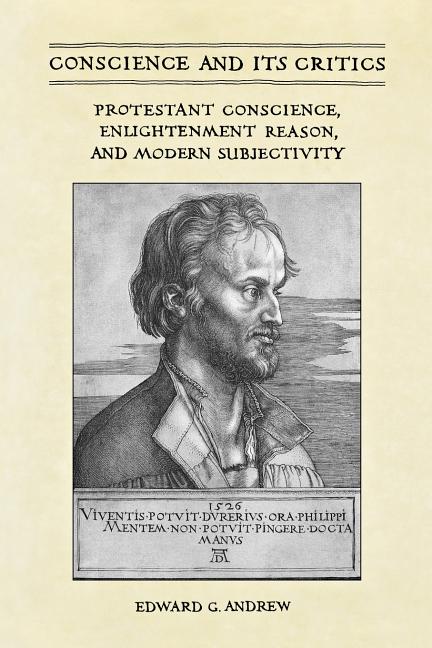
Conscience and Its Critics: Protestant Conscience, Enlightenment Reason, and Modern Subjectivity - Paperback
Pay over time for orders over $35.00 with
Offers & Perks
Earn 43 points with this purchase
Added to your rewards balance after checkout.
100 points welcome bonus
Create an account and start with extra points.
Conscience and Its Critics is an eloquent and passionate examination of the opposition between Protestant conscience and Enlightenment reason in the seventeenth and eighteenth centuries. Seeking to illuminate what the United Nations Declaration of Rights means in its assertion that reason and conscience are the definitive qualities of human beings, Edward Andrew attempts to give determinate shape to the protean notion of conscience through historical analysis.
The argument turns on the liberal Enlightenment's attempt to deconstruct conscience as an innate practical principle. The ontological basis for individualism in the seventeenth century, conscience was replaced in the eighteenth century by public opinion and conformity to social expectations. Focusing on the English tradition of political thought and moral psychology and drawing on a wide range of writers, Andrew reveals a strongly conservative dimension to the Enlightenment in opposing the egalitarian and antinomian strain in Protestant conscience. He then traces the unresolved relationship between reason and conscience through to the modern conception of the liberty of conscience, and shows how conscience served to contest social inequality and the natural laws of capitalist accumulation.
Contributor(s)
Author
Free shipping on orders over $75. Standard shipping takes 3-7 business days. Eligible items may be returned within 30 days of delivery. Conditions apply.