
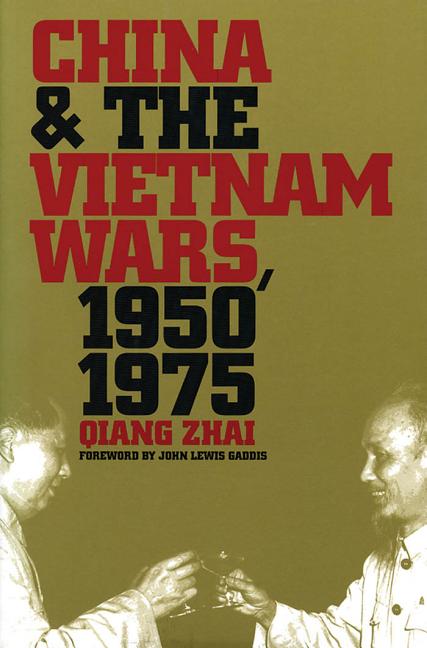
China and the Vietnam Wars, 1950-1975 - Paperback
by Qiang Zhai
$44.99
Quantity
01
Pay over time for orders over $35.00 with
Offers & Perks
Earn 44 points with this purchase
Added to your rewards balance after checkout.
100 points welcome bonus
Create an account and start with extra points.
Availability:In StockContributor:Qiang Zhai, John Lewis GaddisSeries:New Cold War HistoryTheme:Chronological Period/1950's, Chronological Period/1960's, Chronological Period/1970's, Cultural Region/Southeast AsianPublish date:4/3/2000Pages:320
Languages:EnglishPublisher:University of North Carolina PressISBN-13:9780807848425ISBN-10:0807848425UPC:9780807848425Book Category:History, Political ScienceBook Subcategory:Wars & Conflicts, Political Ideologies, AsiaBook Topic:Vietnam War, Communism, Post-Communism & Socialism, Southeast AsiaSize:9.23 x 6.14 x 0.81 inchesWeight:0.486Product ID:SCT3K94KEQ
In the quarter century after the founding of the People's Republic of China in 1949, Beijing assisted Vietnam in its struggle against two formidable foes, France and the United States. Indeed, the rise and fall of this alliance is one of the most crucial developments in the history of the Cold War in Asia. Drawing on newly released Chinese archival sources, memoirs and diaries, and documentary collections, Qiang Zhai offers the first comprehensive exploration of Beijing's Indochina policy and the historical, domestic, and international contexts within which it developed.
In examining China's conduct toward Vietnam, Zhai provides important insights into Mao Zedong's foreign policy and the ideological and geopolitical motives behind it. Throughout the 1950s and 1960s, he shows, Mao considered the United States the primary threat to the security of the recent Communist victory in China and therefore saw support for Ho Chi Minh as a good way to weaken American influence in Southeast Asia. In the late 1960s and 1970s, however, when Mao perceived a greater threat from the Soviet Union, he began to adjust his policies and encourage the North Vietnamese to accept a peace agreement with the United States.
In examining China's conduct toward Vietnam, Zhai provides important insights into Mao Zedong's foreign policy and the ideological and geopolitical motives behind it. Throughout the 1950s and 1960s, he shows, Mao considered the United States the primary threat to the security of the recent Communist victory in China and therefore saw support for Ho Chi Minh as a good way to weaken American influence in Southeast Asia. In the late 1960s and 1970s, however, when Mao perceived a greater threat from the Soviet Union, he began to adjust his policies and encourage the North Vietnamese to accept a peace agreement with the United States.
Languages:EnglishPublisher:University of North Carolina PressISBN-13:9780807848425ISBN-10:0807848425UPC:9780807848425Book Category:History, Political ScienceBook Subcategory:Wars & Conflicts, Political Ideologies, AsiaBook Topic:Vietnam War, Communism, Post-Communism & Socialism, Southeast AsiaSize:9.23 x 6.14 x 0.81 inchesWeight:0.486Product ID:SCT3K94KEQ
Qiang Zhai is professor of history at Auburn University Montgomery in Alabama.
Publisher: University of North Carolina Press
Contributor(s)
Author
Free shipping on orders over $75. Standard shipping takes 3-7 business days. Eligible items may be returned within 30 days of delivery. Conditions apply.