
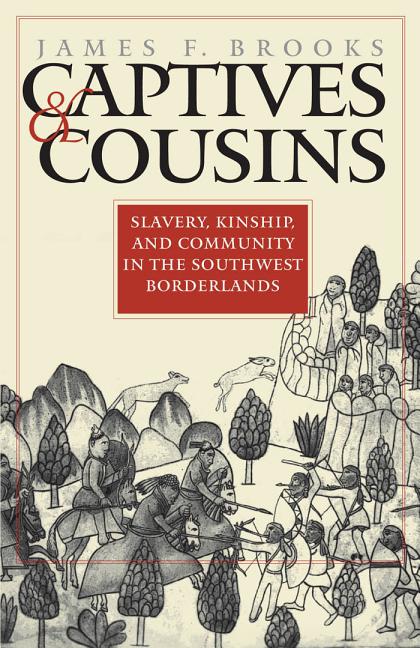
Captives and Cousins: Slavery, Kinship, and Community in the Southwest Borderlands - Paperback
$48.99
Quantity
01
Pay over time for orders over $35.00 with
Offers & Perks
Earn 48 points with this purchase
Added to your rewards balance after checkout.
100 points welcome bonus
Create an account and start with extra points.
Availability:In StockContributor:James F. BrooksSeries:Published by the Omohundro Institute of Early American HistoTheme:Cultural Region/Mexican, Cultural Region/Southwest U.S., Sex & Gender/FemininePublish date:5/14/2002Pages:432
Languages:EnglishPublisher:Omohundro Institute and Unc PressISBN-13:9780807853825ISBN-10:0807853828UPC:9780807853825Book Category:History, Social ScienceBook Subcategory:Indigenous, Latin America, EnslavementBook Topic:MexicoSize:9.26 x 6.30 x 1.08 inchesWeight:0.617Product ID:SCDZX9XQQ9
This sweeping, richly evocative study examines the origins and legacies of a flourishing captive exchange economy within and among native American and Euramerican communities throughout the Southwest Borderlands from the Spanish colonial era to the end of the nineteenth century.
Indigenous and colonial traditions of capture, servitude, and kinship met and meshed in the borderlands, forming a "slave system" in which victims symbolized social wealth, performed services for their masters, and produced material goods under the threat of violence. Slave and livestock raiding and trading among Apaches, Comanches, Kiowas, Navajos, Utes, and Spaniards provided labor resources, redistributed wealth, and fostered kin connections that integrated disparate and antagonistic groups even as these practices renewed cycles of violence and warfare.
Always attentive to the corrosive effects of the "slave trade" on Indian and colonial societies, the book also explores slavery's centrality in intercultural trade, alliances, and "communities of interest" among groups often antagonistic to Spanish, Mexican, and American modernizing strategies. The extension of the moral and military campaigns of the American Civil War to the Southwest in a regional "war against slavery" brought differing forms of social stability but cost local communities much of their economic vitality and cultural flexibility.
Indigenous and colonial traditions of capture, servitude, and kinship met and meshed in the borderlands, forming a "slave system" in which victims symbolized social wealth, performed services for their masters, and produced material goods under the threat of violence. Slave and livestock raiding and trading among Apaches, Comanches, Kiowas, Navajos, Utes, and Spaniards provided labor resources, redistributed wealth, and fostered kin connections that integrated disparate and antagonistic groups even as these practices renewed cycles of violence and warfare.
Always attentive to the corrosive effects of the "slave trade" on Indian and colonial societies, the book also explores slavery's centrality in intercultural trade, alliances, and "communities of interest" among groups often antagonistic to Spanish, Mexican, and American modernizing strategies. The extension of the moral and military campaigns of the American Civil War to the Southwest in a regional "war against slavery" brought differing forms of social stability but cost local communities much of their economic vitality and cultural flexibility.
Languages:EnglishPublisher:Omohundro Institute and Unc PressISBN-13:9780807853825ISBN-10:0807853828UPC:9780807853825Book Category:History, Social ScienceBook Subcategory:Indigenous, Latin America, EnslavementBook Topic:MexicoSize:9.26 x 6.30 x 1.08 inchesWeight:0.617Product ID:SCDZX9XQQ9
Brooks, James F.: -
James F. Brooks is professor of history & anthropology at the University of California, Santa Barbara. He is editor of Confounding the Color Line: The Indian-Black Experience in North America.
Publisher: Omohundro Institute and Unc Press
Contributor(s)
Author
Free shipping on orders over $75. Standard shipping takes 3-7 business days. Eligible items may be returned within 30 days of delivery. Conditions apply.