
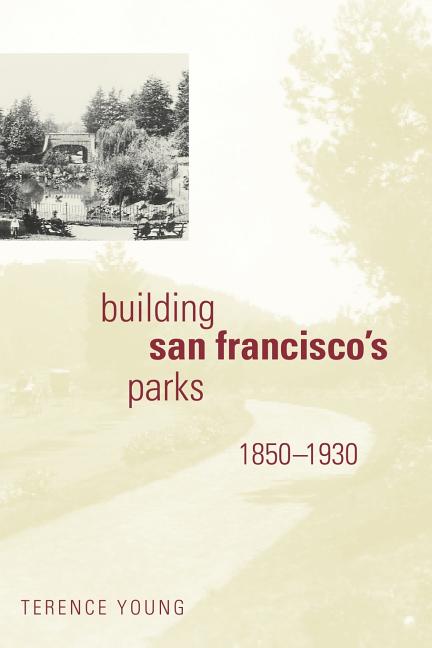
Building San Francisco's Parks, 1850-1930 - Paperback
$36.99
Quantity
01
Pay over time for orders over $35.00 with
Offers & Perks
Earn 36 points with this purchase
Added to your rewards balance after checkout.
100 points welcome bonus
Create an account and start with extra points.
Availability:In StockContributor:Terence YoungSeries:Creating the North American LandscapeTheme:Cultural Region/Western U.S., Demographic Orientation/UrbanAudience:Young AdultPublish date:4/1/2008Pages:280
Languages:EnglishPublisher:Johns Hopkins University PressISBN-13:9780801889813ISBN-10:0801889812UPC:9780801889813Book Category:Architecture, HistoryBook Subcategory:Landscape, United States, Urban & Land Use PlanningBook Topic:State & LocalSize:9.00 x 6.00 x 0.63 inchesWeight:0.413Product ID:SCY7MJ93A1
In 1865, when San Francisco's Daily Evening Bulletin asked its readers if it were not time for the city to finally establish a public park, residents had only private gardens and small urban squares where they could retreat from urban crowding, noise, and filth. Five short years later, city supervisors approved the creation of Golden Gate Park, the second largest urban park in America. Over the next sixty years, and particularly after 1900, a network of smaller parks and parkways was built, turning San Francisco into one of the nation's greenest cities. In Building San Francisco's Parks, 1850-1930, Terence Young traces the history of San Francisco's park system, from the earliest city plans, which made no provision for a public park, through the private garden movement of the 1850s and 1860, Frederick Law Olmsted's early involvement in developing a comprehensive parks plan, the design and construction of Golden Gate Park, and finally to the expansion of green space in the first third of the twentieth century. Young documents this history in terms of the four social ideals that guided America's urban park advocates and planners in this period: public health, prosperity, social coherence, and democratic equality. He also differentiates between two periods in the history of American park building, each defined by a distinctive attitude towards "improving" nature: the romantic approach, which prevailed from the 1860s to the 1880s, emphasized the beauty of nature, while the rationalistic approach, dominant from the 1880s to the 1920s, saw nature as the best setting for uplifting activities such as athletics and education. Building San Francisco's Parks, 1850-1930 maps the political, cultural, and social dimensions of landscape design in urban America and offers new insights into the transformation of San Francisco's physical environment and quality of life through its world-famous park system.
Languages:EnglishPublisher:Johns Hopkins University PressISBN-13:9780801889813ISBN-10:0801889812UPC:9780801889813Book Category:Architecture, HistoryBook Subcategory:Landscape, United States, Urban & Land Use PlanningBook Topic:State & LocalSize:9.00 x 6.00 x 0.63 inchesWeight:0.413Product ID:SCY7MJ93A1
Terence Young is an associate professor of geography at California State Polytechnic University, Pomona.
Publisher: Johns Hopkins University Press
Contributor(s)
Author
Free shipping on orders over $75. Standard shipping takes 3-7 business days. Eligible items may be returned within 30 days of delivery. Conditions apply.