
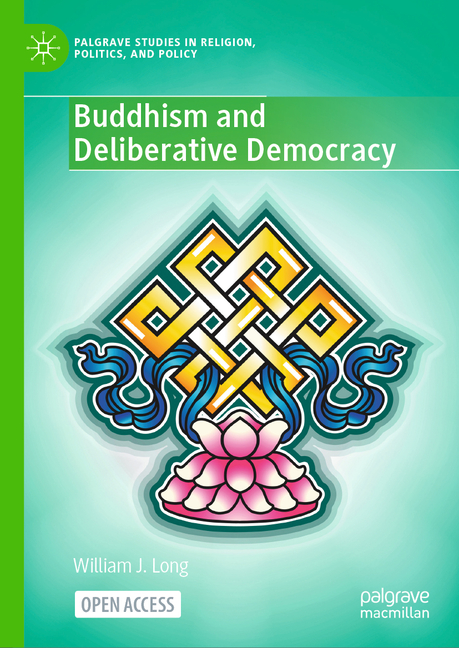
Buddhism and Deliberative Democracy - Hardcover
Pay over time for orders over $35.00 with
Offers & Perks
Earn 37 points with this purchase
Added to your rewards balance after checkout.
100 points welcome bonus
Create an account and start with extra points.
In this open access book, William Joseph Long argues the sangha, whose governance Buddha based on the secular republics of his era was his model of an ideal democratic polity and meant to be a self-governing exemplar to the wider society then and now. In an era of declining efficacy of democracies around the world, political theorists frequently recommend deliberative processes and models as the remedy for democracy's current problems. The idea of "deliberative democracy" argues democratic decisions and policies can be made more legitimate, more intelligent, and more socially stabilizing through the give and take of reasons and justifications among those affected. Proponents of deliberative democracy believe public deliberation and reasoning among free and equal citizens are the essence of authentic democratic decisions. Deliberation should strive toward an ideal of rationally achieved consensus that serves the common good, not merely a majority vote driven by competing self-interests and power. Yet almost all contemporary literature is Western in origin and generated from the late 20th century to the present.
In Buddhism and Deliberative Democracy, Long argues, based on frequent assembly, discussion, and problem solving by all its members operating as equals regardless of class, caste, or gender, that Sangha governance was guided by the sutras and the Vinaya, a clear set of laws and a commitment to moral development, harmony, the common good, and fair administration. He interpret Buddha's writings as original and important contributions to political philosophy and argues that Buddha was a rationalistic, humanistic, and democratic theorist of great contemporary relevance.
William J. Long is Professor of Political Science at Georgia State University. He is the author of Radical Interdependence: A Buddhist Approach to International Relations (2021), Tantric State: A Buddhist Approach to Democracy and Development in Bhutan (2019), and numerous other works.
Contributor(s)
Author
Free shipping on orders over $75. Standard shipping takes 3-7 business days. Eligible items may be returned within 30 days of delivery. Conditions apply.