
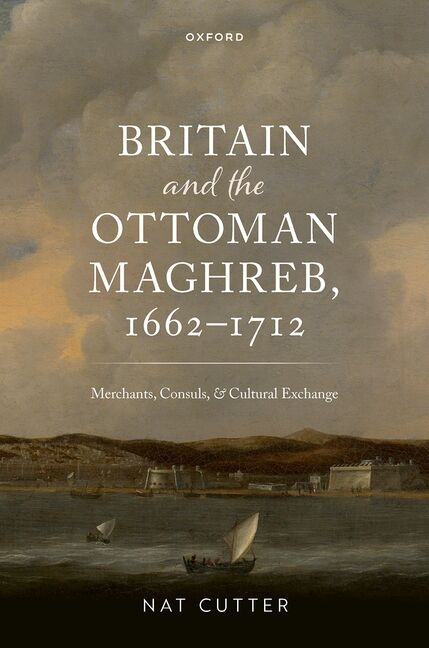
Britain and the Ottoman Maghreb, 1662-1712: Merchants, Consuls, and Cultural Exchange - Hardcover
by Nat Cutter
$141.99
Quantity
01
Pay over time for orders over $35.00 with
Offers & Perks
Earn 141 points with this purchase
Added to your rewards balance after checkout.
100 points welcome bonus
Create an account and start with extra points.
Availability:In StockContributor:Nat CutterTheme:Cultural Region/AfricanPublish date:7/30/2026Pages:352
From the mid-seventeenth to early eighteenth century, a wide network of English-speaking men, women, and children took up residence in the Ottoman Maghrebi regencies of Algiers, Tunis, and Tripoli. There they formed expatriate communities, engaged with the societies around them, and undertook their businesses, from trading to captivity redemption to international politics. Moving beyond official diplomatic records and printed texts, this book delves into thousands of personal letters and financial records, where we find friendship, conflict, adoration, derision, manipulation, and scandal across cultures and countries. In so doing, it offers new ways of thinking about British-Maghrebi relations in a transitional age for global trade and military-naval power, moving beyond plaintive consular complaints, gunboat diplomacy, and brutal captivity to accommodate positive cooperation and mutual benefit. These expatriates became embedded mediators, hybridised European and Ottoman cultural forms, and experienced distanciation from both homeland and hostland to enjoy and manipulate both. For them, Algiers, Tunis, and Tripoli were not solely sites for danger or exploitation but, as peace was progressively established with each regency, increasingly places for pragmatic cooperation, personal and professional advancement, commercial success, and enjoyment. Expansive networks of correspondence and cooperation around the Maghreb, Mediterranean, and Britain embedded the expatriates in a cross-cultural trade in material goods and information and allowed them to manipulate the course of trade and diplomacy between Britain and the Maghreb. The expatriates were less marginal, miserable, and misbehaving Britons and more embedded, canny, Mediterranean actors.
Nat Cutter, Mary Lugton Postdoctoral Fellow and Assistant Lecturer in History, University of Melbourne Nat Cutter is a historian of early modern Britain and the Islamicate Mediterranean, with interests in diplomatic history, cultural history, networks, media history, digital humanities, and piracy. He is currently a postdoctoral fellow at The University of Melbourne, re-assessing the Ottoman Maghreb's place in Mediterranean trade. Nat's research has appeared in Cultural and Social History, Gender & History, Renaissance Studies, Parergon, and Digital Humanities Quarterly, supported by grants, fellowships, and prizes from the Huntington Library, Folger Shakespeare Library, Hakluyt Society, American Society for Eighteenth-Century Studies, ANZAMEMS, and The University of Melbourne.
Publisher: Oxford University Press
Contributor(s)
Author
Free shipping on orders over $75. Standard shipping takes 3-7 business days. Eligible items may be returned within 30 days of delivery. Conditions apply.