
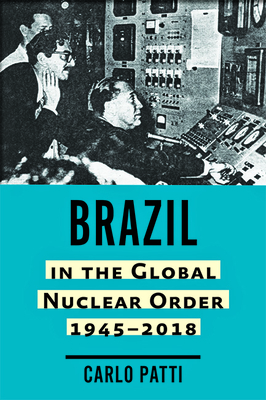
Brazil in the Global Nuclear Order, 1945-2018 - Hardcover
Pay over time for orders over $35.00 with
Offers & Perks
Earn 60 points with this purchase
Added to your rewards balance after checkout.
100 points welcome bonus
Create an account and start with extra points.
The first comprehensive and definitive history of Brazil's decision to give up the nuclear weapon option.
Why do countries capable of going nuclear choose not to? Brazil, which gained notoriety for developing a nuclear program and then backtracking into adherence to the nonproliferation regime, offers a fascinating window into the complex politics surrounding nuclear energy and American interference.
Since the beginning of the nuclear age, author Carlo Patti writes, Brazil has tried to cooperate with other countries in order to master nuclear fuel cycle technology, but international limitations have constrained the country's approach. Brazil had the start of a nuclear program in the 1950s, which led to the United States interfering in agreements between Brazil and other countries with advanced nuclear industries, such as France and West Germany. These international constraints, especially those imposed by the United States, partly explain the country's decision to create a secret nuclear program in 1978 and to cooperate with other countries outside the Nuclear Non-Proliferation Treaty [NPT] regime, such as Argentina and China. Yet, in 1998, Brazil chose to adhere to the Nuclear Non-Proliferation Treaty it so actively opposed only three decades prior, although the country still critiques the unfair nature of the treaty.
Patti draws on recent declassified primary sources collected during years of research in public and private archives in eight different countries, as well as interviews with former presidents, diplomats, and scientists, to show how US nonproliferation policies deeply affected Brazil's decisions. Assessing the domestic and international factors that informed the evolution of Brazil's nuclear diplomacy, Brazil in the Global Nuclear Order, 1945-2018 also discusses what it means with respect to Brazil's future political goals.
Carlo Patti is a professor of international relations at the Federal University of Goiás.
Contributor(s)
Author
Free shipping on orders over $75. Standard shipping takes 3-7 business days. Eligible items may be returned within 30 days of delivery. Conditions apply.